LinkedIf
When I was a boy, I had a poster of Rudyard Kipling’s poem “If” on my wall. As a result, I’ve always had a soft spot for it, even though Kipling can be a controversial character.
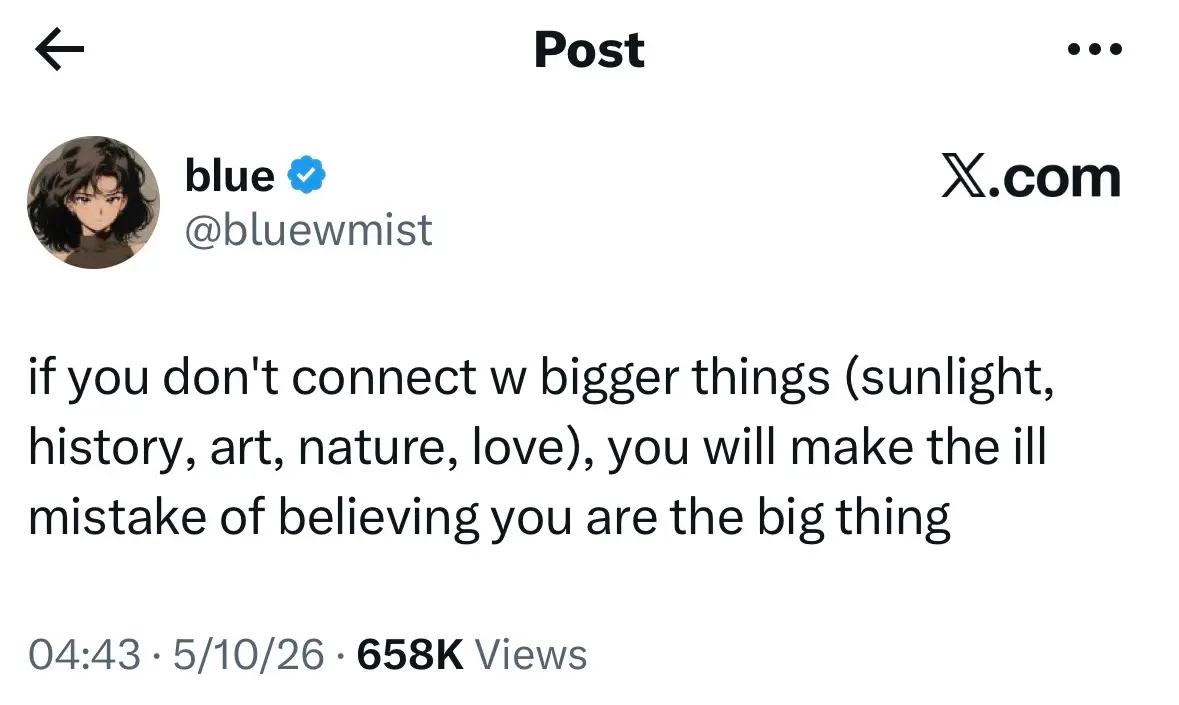
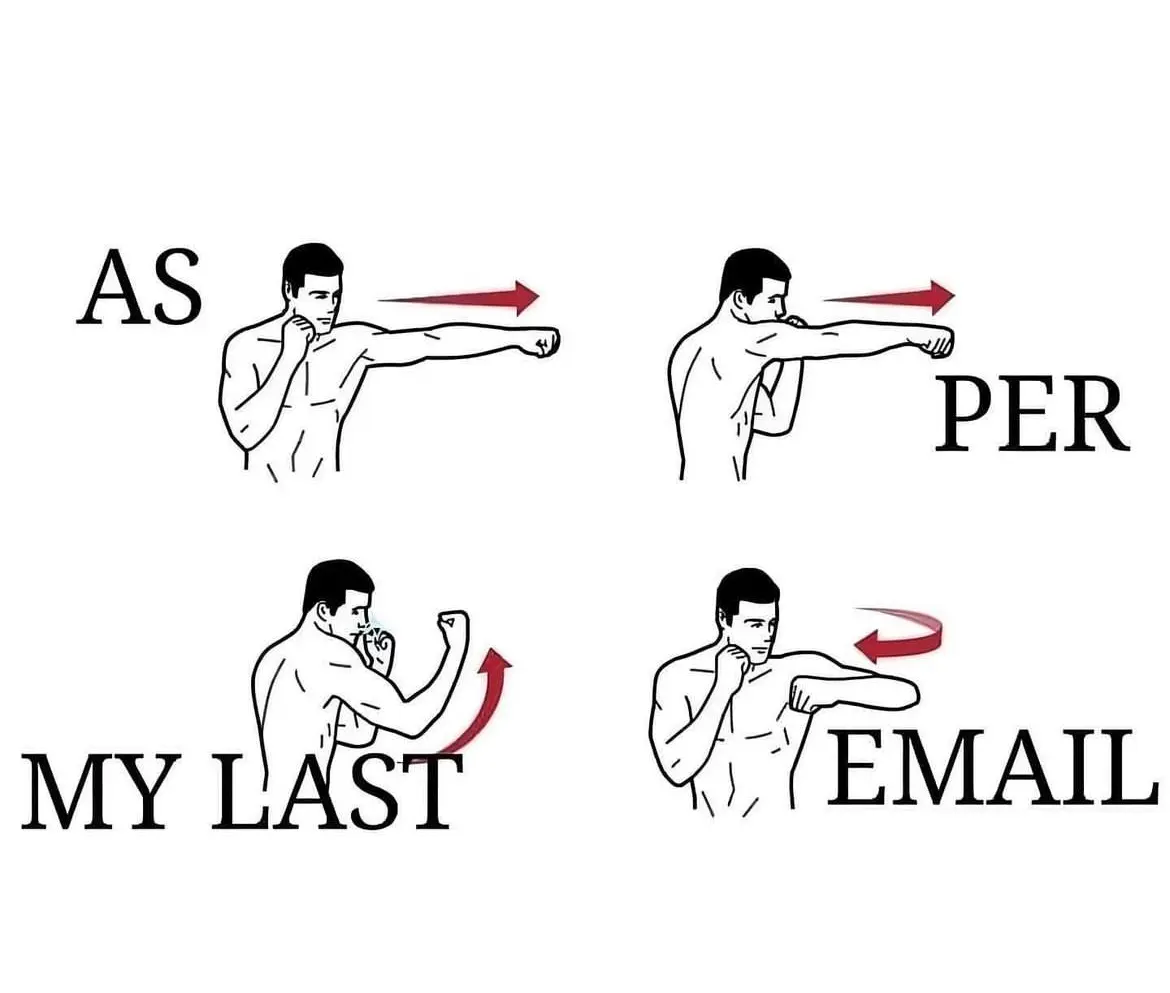
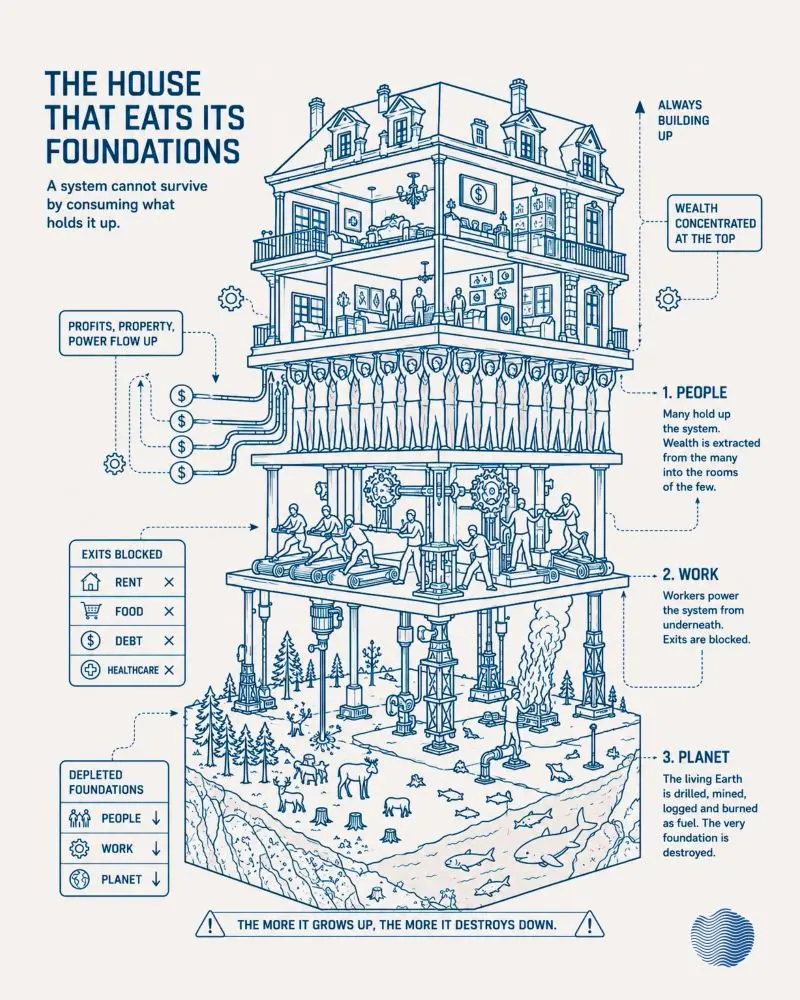
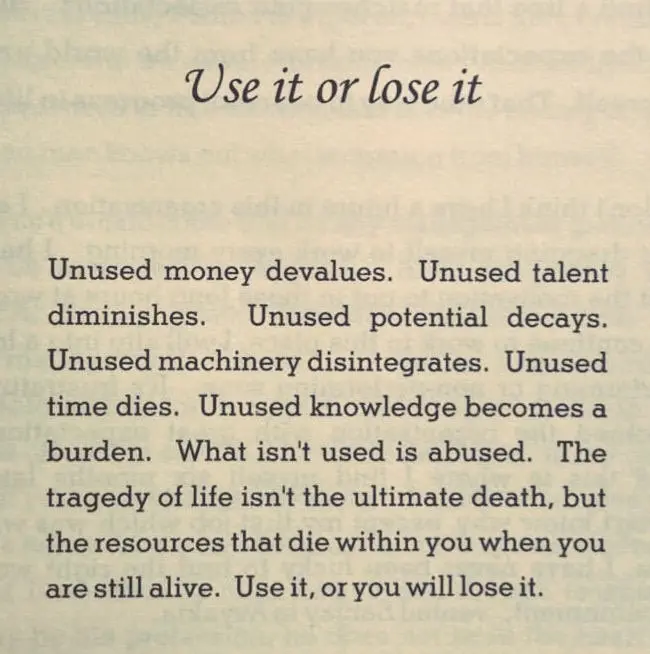
So I found this parody entitled “LinkedIf” by Jamie Hardesty hilarious. So, so good.
Source: LinkedIn
We will no longer have the conspiracy nonsense about state control
This climbdown was, perhaps, inevitable. Especially given what’s going on in the US, where the Secretary for the Department of Homeland Security has said that citizens need to be ready to show proof of citizenship.
People will still need to prove they have the right to work in the UK, but using digital identification won’t be the only way. I’m pleased, as it will make my work in Scotland around Verifiable Credentials much easier. Perception often trumps fact.
People will still be required to verify their ID digitally, by a process still to be finished, but this could involve existing documents such as a passport. The hope is that this would crack down on illegal working while avoiding the controversy of an in effect compulsory ID system.
It is understood that one of the motivations for the change was to allow people who wanted to use digital ID to do so, while avoiding the PR hurdle of a mandatory element. As one official put it: “We will no longer have the conspiracy nonsense about state control.”
A government spokesperson said: “We are committed to mandatory digital right to work checks. We have always been clear that details on the digital ID scheme will be set out following a full public consultation which will launch shortly.
Source: The Guardian
Image: Tom Radetzki
If execution is no longer the differentiator, what is?
In a post entitled Ideas are cheap, execution is cheaper, Dave Kiss talks about his changing role as a software developer in a world of AI. It’s something I wrote about here. The hard part isn’t coming up with ideas or even shipping them any more; it’s what happens after that. Iteration. Support. Maintenance. Care.
Earlier this week, after switching from Google to Proton and needing an appointment scheduler, I got Perplexity to come up with a Product Reference Document (PRD) after a conversation discussing what I needed. Then I put that into Cursor and about 10 minutes later I had the basis of Scheduler which I’ve released on GitHub.
It needs some tweaking around mail delivery, but it’s running at scheduler.dougbelshaw.com. The hard bit wasn’t the idea, or the execution, but keeping it running, maintaining it, and iterating on new features.
I tweeted about Triage in response to someone saying talented engineers now write the majority of their code with agents. My reply: “What about not writing the code at all?” I described the idea—users report bugs to AI, AI triages and implements, AI opens the PR.
Days later, the same person published an article: “Our AI agent now files its own bug reports.”
They liked my tweet, saw the idea, and shipped it.
I’m not claiming ownership. That’s exactly the point. In a world where execution is trivial, ideas become instantly commodifiable. The moat isn’t “I can build this and you can’t.” The moat can’t be that anymore, because anyone can build anything. The window between sharing an idea and someone else shipping it has collapsed from months to days—sometimes hours.
[…]
If execution is no longer the differentiator, what is?
Speed of iteration matters. Not speed of initial build—everyone has that now. Speed of learning. How fast can you ship, learn from users, and adapt? The teams that win will be the ones that cycle fastest, not the ones that build first.
Taste matters. Knowing what’s worth building. Knowing what to say no to. In a world where you can build anything, the scarcest resource is judgment about what should exist. Most things shouldn’t.
Distribution matters. It always did, but now it matters more. When everyone can build, the only differentiation is who people hear about, who they trust, whose product they encounter first. The network you can tap into for trials and feedback—that’s the real moat.
Problem selection matters. The hardest part of building software was never typing the code. It was figuring out which problems are real, which solutions people will pay for, which bets are worth making. That calculus hasn’t changed. If anything, it’s more important now because the cost of building the wrong thing is lower, which means more wrong things will get built.
The “execution is hard” era trained us to be careful about what we committed to building. That constraint is gone. The new discipline is choosing wisely when you can build anything.
Source: Dave Kiss
Image: Resource Database
Bottom-up (systems) thinking
I have no idea if I’m neurodivergent. I don’t think I’ve got ADHD, and all men are probably on the spectrum somewhere. Who’d want to be neuro_typical_ anyway?
Wwhat I do know i that the neurodiverse people I’ve worked with in my career have been pretty awesome. This post outlines some reasons that neurodivergent brains build better systems. It’s worth a read.
Trait 1: Systems Thinking
Neurotypical people are top-down thinkers. They have a hypothesis first then obtain data to support or disprove the hypothesis.
Neurodivergent people are bottom-up thinkers. They begin collecting relevant data first then form their hypothesis or “big picture” later.
[…]
Trait 2: Hyperfocus and Flow
We live in a distraction economy. Nearly everything in the modern world seeks to rob our focus and divide it among a million shallow things.
Neurodivergent people don’t focus, they obsess. This is a rare skill in these times. I have met neurodivergent people who have created their own programming language and composed and recorded full albums worth of music in just a week.
[…]
Trait 3: Automation Instinct
Manual repetitive process can be extremely disruptive and frustrating for neurodivergent employees.
Imagine that you have the power to type characters into a machine that then does things automatically for you 24/7 at a scale of millions, billions, or just about whatever scale you ask it to. You have that power, and then someone tells you to manually enter numbers that you fetch from one system into a spreadsheet in another system. Once? Fine, there’s always going to be some grunt work. If this becomes the norm though, neurodivergent employees will resent the work.
So what works for neurodivergent workers? The post has a list:
- Remote-first
- Cultural discipline
- Neurodivergent representation
Source: Dr. Josh C. Simmons
Image: Wiki Sinaloa
A deliberate willingness to be helped
I really enjoyed reading this post by Kevin Kelly about hitch-hiking, the kindness of strangers, and, most importantly, the generosity of being willing to be helped.
Kindness is like a breath. It can be squeezed out, or drawn in. You can wait for it, or you can summon it. To solicit a gift from a stranger takes a certain state of openness. If you are lost or ill, this is easy, but most days you are neither, so embracing extreme generosity takes some preparation. I learned from hitchhiking to think of this as an exchange. During the moment the stranger offers his or her goodness, the person being aided can reciprocate with degrees of humility, dependency, gratitude, surprise, trust, delight, relief, and amusement to the stranger. It takes some practice to enable this exchange when you don’t feel desperate. Ironically, you are less inclined to be ready for the gift when you are feeling whole, full, complete, and independent!
[…]
Altruism among strangers, on the other hand, is simply strange. To the uninitiated its occurrence seems as random as cosmic rays. A hit or miss blessing that makes a good story. The kindness of strangers is gift we never forget.
But the strangeness of “kindees” is harder to explain. A kindee is what you turn into when you are kinded. Curiously, being a kindee is an unpracticed virtue. Hardly anyone hitchhikes any more, which is a shame because it encourages the habit of generosity from drivers, and it nurtures the grace of gratitude and patience of being kinded from hikers. But the stance of receiving a gift – of being kinded — is important for everyone, not just travelers. Many people resist being kinded unless they are in dire life-threatening need. But a kindee needs to accept gifts more easily. Since I have had so much practice as a kindee, I have some pointers on how it is unleashed.
I believe the generous gifts of strangers are actually summoned by a deliberate willingness to be helped. You start by surrendering to your human need for help. That we cannot be helped until we embrace our need for help is another law of the universe. Receiving help on the road is a spiritual event triggered by a traveler who surrenders his or her fate to the eternal Good. It’s a move away from whether we will be helped, to how: how will the miracle unfold today? In what novel manner will Good reveal itself? Who will the universe send today to carry away my gift of trust and helplessness?
Source: The Technium
Image: David Guevara
What content are you really trying to provide and how do you get to it?
If you visit dougbelshaw.com it will appear pretty much instantly, no matter what speed of internet connection you’re on. Why? Because it’s 4.9kB in size. Over 3kB of that is the favicon so I could reduce it even further by not having that little ⚡ emoji show up on the web browser tab. But you’ve got to have some flair…
There are sites that are under 512kB in size. That’s easy. You can get sites under 1kB too. But why would anyone care? Well, as this post explains, sometimes accessibility and page speed is a matter of life and death.
We recently passed the one-year anniversary of Hurricane Helene and its devastating impact on Western North Carolina. When the storm hit, causing widespread flooding, it wasn’t just the power that was knocked out for weeks due to all the downed trees. Many cell towers were damaged, leaving people with little to no access to life-saving emergency information.
[…]
When I was able to load some government and emergency sites, problems with loading speed and website content became very apparent. We tried to find out the situation with the highways on the government site that tracks road closures. I wasn’t able to view the big slow loading interactive map and got a pop-up with an API failure message. I wish the main closures had been listed more simply, so I could have seen that the highway was completely closed by a landslide.
[…]
With a developing disaster situation, obviously not all information can be perfect. During the outages, many people got information from the local radio station’s ongoing broadcasts. The best information I received came from an unlikely place: a simple bulleted list in a daily email newsletter from our local state representative. Every day that newsletter listed food and water, power and gas, shelter locations, road and cell service updates, etc.
Limited connectivity isn’t something that only happens during natural disasters. It can happen all the time in our daily lives. In more rural areas around me, service is already pretty spotty. In the past, while working outdoors in an area without Wi-Fi, I’ve found myself struggling to load or even find instruction manuals or how-to guides from various product manufacturers.
Just using Semantic HTML and the correct native elements, we also can set a baseline for better accessibility. And make sure interactive elements can be reached with a keyboard and screen readers have a good sense of what things are on the page. Making websites responsive for mobile devices is not optional, and devs have had the CSS tools and experience to do this for over a decade. Information architecture and content is important to plan and revisit. What content are you really trying to provide and how do you get to it?
Source: Sparkbox
Image: Pierre Borthiry - Peiobty
Celebrating the lesser-known at the Internet Archive
Bryan Alexander, longtime reader of Thought Shrapnel shared this with me. January 1st is known as ‘Public Domain Day’ as new works become freely available as their copyright expires.
This interactive ‘tapestry’ was created by Bob Stein, who is founder and co-director of The Institute for the Future of the Book. It’s worth investigating!
On January 1st people celebrate the books entering the public domain after their copywrights expire. This year, that means books published in 1930. Unsurprisingly people focus on the “famous” titles which this year include As I Lay Dying, The Maltese Falcon, four Nancy Drew titles and Freud’s Civilization and Its Discontents. I sense that people read the lists and check-off the ones they’ve heard of, but rarely do more. So, I thought it might be interesting to dig a little deeper. Not only is it fun to explore the relatively unknown, I think there’s a lot to be learned by looking at the ways our forebears looked at the world 95 years ago. Public Domain Day is celebrated all over the western world but each country or region has different copyright periods so the newly arrived titles are not the same. This collection is all U.S. based and all the books displayed here are from the Internet Archive.
Source: tapestries.media
The Questions
One of the great things about Are.na is that you find all kinds of links and clips that people have shared. Sometimes, though, you don’t know where they came from, which is the case for this great list of questions.
They’re very pertinent to my life right now, and I should imagine quite a few people at the beginning of a new year.
Source: thorge xyz
Avoiding 'hacklore'
I mentioned a few months ago the hysteresis effect which means there’s always a lag — and sometimes a big lag — between the state of things and our response to it.
Advice around privacy and security is a good example of this. People are often way out date with what constitutes good practice. This open letter from “current and former Chief Information Security Officers (CISOs), security leaders, and practitioners” points to advice to avoid public wifi, never charge from public USB ports, and to regularly ‘clear cookies’ as being pointless.
This constitutes what they call “hacklore” (a blend of “hacking” and “folklore”): modern urban legends about digital safety. It “spreads quickly and confidently… as if it were hard-earned wisdom” but “like most folklore, it isn’t grounded in reality, no matter how plausible it sounds.”
Instead of this hacklore they suggest the following, and have a newsletter which you might want to subscribe to if this piques your interest:
Keep critical devices and applications updated: Focus your attention on the devices and applications you use to access essential services such as email, financial accounts, cloud storage, and identity-related apps. Enable automatic updates wherever possible so these core tools receive the latest security fixes. And when a device or app is no longer supported with security updates, it’s worth considering an upgrade.
Enable multi-factor authentication (“MFA”, sometimes called 2FA): Prioritize protecting sensitive accounts with real value to malicious actors such as email, file storage, social media, and financial systems. When possible, consider “passkeys”, a newer sign-in technology built into everyday devices that replaces passwords with encryption that resists phishing scams — so even if attackers steal a password, they can’t log in. Use SMS one-time codes as a last resort if other methods are not available.
Use strong passphrases (not just passwords): Passphrases for your important accounts should be “strong.” A “strong” password or passphrase is long (16+ characters), unique (never reused under any circumstances), and randomly generated (which humans are notoriously bad at doing). Uniqueness is critical: using the same password in more than one place dramatically increases your risk, because a breach at one site can compromise others instantly. A passphrase, such as a short sentence of 4–5 words (spaces are fine), is an easy way to get sufficient length. Of course, doing this for many accounts is difficult, which leads us to…
Use a password manager: A password manager solves this by generating strong passwords, storing them in an encrypted vault, and filling them in for you when you need them. A password manager will only enter your passwords on legitimate sites, giving you extra protection against phishing. Password managers can also store passkeys alongside passwords. For the password manager, use a strong passphrase since it protects all the others, and enable MFA.
Source: Stop Hacklore! Open Letterwww.hacklore.org/letter
Image: CC BY Robert Lord
Open Infrastructure map
This is fascinating. Both in terms of the macro picture, but also when you zoom in to where you live, to see the hidden infrastructure that literally powers our world.
Source: Open Infrastructure Map
Post-digital authenticity
I agree with Ava, the author of this post, who effectively says that the internet has been stolen from us by Big Tech and people pushing a “post-authenticity” culture. Going back to offline for verification feels good at first, but steals something from those for whom the internet was liberating.
Looking around the internet, it’s clear that digital representations have become cheap, too perfect, and easily fabricated, and the offline world is increasingly the primary source of confirmation.
[…]
Want to know whether someone really studied, wrote that exam, or is a suitable job candidate? Direct interaction, live problem-solving and in-person demonstrations are the way to go now. Claims of expertise, portfolios, blog posts, code projects, certificates, and even academic records can be fabricated or enhanced by AI online.
[…]
We could call this post-digital authenticity. I know that social media platforms are currently pushing a sort of post-authenticity culture instead, where honesty and truth no longer matters and contrived and fabricated experiences for entertainment (ragebait, AI…) get more attention; but I think many, many people are tired of being constantly lied to, or being unable to trust their senses. I assume that the fascination with the totally fake that some people still have now is shortlived.
This step backwards into the offline feels healing at first, but also hurts, in a way. With all the valid criticisms, the internet still was a rather accessible place to finally find out the truth about events, avoid state censorship, and get to know people differently. It was especially good for the people who could not experience the same offline: People in rural areas, disabled and chronically ill people, queer people living far out and away from their peers, and more. It sucks that while others can and will return to a more authentic offline life, the ones left behind in a wasteland of mimicry are the ones who have always been left out.
Source: …hi, this is ava
Image: Igor Omilaev
Humans exhibit analogues of LLM pathologies
Over on my personal blog I published a post today about AGI already being here and how it’s affecting young people. What we don’t seem to be having a conversation about at the moment, other than the ‘sycophancy’ narrative, is why some people prefer talking to LLMs over human beings.
Which brings us to this post, not about the problems about conversing with AI, but applying some of those critiques to interacting with humans. It which should definitely be taken in a tongue-in-cheek way but it does point towards a wider truth.
Too narrow training set
I’ve got a lot of interests and on any given day, I may be excited to discuss various topics, from kernels to music to cultures and religions. I know I can put together a prompt to give any of today’s leading models and am essentially guaranteed a fresh perspective on the topic of interest. But let me pose the same prompt to people and more often then not the reply will be a polite nod accompanied by clear signs of their thinking something else entirely, or maybe just a summary of the prompt itself, or vague general statements about how things should be. In fact, so rare it is to find someone who knows what I mean that it feels like a magic moment. With the proliferation of genuinely good models—well educated, as it were—finding a conversational partner with a good foundation of shared knowledge has become trivial with AI. This does not bode well for my interest in meeting new people.
[…]
Failure to generalize
By this point, it’s possible to explain what happens in a given situation, and watch the model apply the lessons learned to a similar situation. Not so with humans. When I point out that the same principles would apply elsewhere, their response will be somewhere along the spectrum of total bafflement on the one end and on the other, a face-saving explanation that the comparison doesn’t apply “because it’s different”. Indeed the whole point of comparisons is to apply same principles in different situations, so why the excuse? I’ve learned to take up such discussions with AI and not trouble people with them.
[…]
Indeed, why am I even writing this? I asked GPT-5 for additional failure modes and found more additional examples than I could hope to get from a human:
Beyond the failure modes already discussed, humans also exhibit analogues of several newer LLM pathologies: conversations often suffer from instruction drift, where the original goal quietly decays as social momentum takes over; mode collapse, in which people fall back on a small set of safe clichés and conversational templates; and reward hacking, where social approval or harmony is optimized at the expense of truth or usefulness. Humans frequently overfit the prompt, responding to the literal wording rather than the underlying intent, and display safety overrefusal, declining to engage with reasonable questions to avoid social or reputational risk. Reasoning is also marked by inconsistency across turns, with contradictions going unnoticed, and by temperature instability, where fatigue, emotion, or audience dramatically alters the quality and style of thought from one moment to the next.
Source: embd.cc
Image: Ninthgrid
19/20 for me. How about you?
A university degree is now more like a 'visa' than a guaranteed route to professional success
Earlier this week, I published at my newly-revamped personal blog a post entitled Your mental models are out of date. The main thrust of what I was saying was that young people are getting advice from older people whose understanding of the world does not mesh with the way things really are in the mid-2020s.
This article in The Guardian is helpful for understanding the other side of the argument from a policy perspective. My opinion is that as many young people who want to go to university should be able to go, and that it’s the duty of us as a society to enable that to happen as efficiently as possible. Yes, that means that the value of a ‘degree’ as a chunky proxy credential decreases, but that’s why we should have more tailored, up-to-date, granular credentials in any case.
Prof Shitij Kapur, the head of King’s College London, said the days when universities could promise that their graduates were certain to get good jobs are over, in an era where nearly half the population enters higher education.
Kapur said a university degree is now more like a “visa” than a guaranteed route to professional success, a reflection of the shrinking graduate pay premium and the increased competition from AI and other graduates from around the world.
“The competition for graduate jobs is not just all because of AI filling out forms or AI taking away jobs. It’s also because of the stalling of our economy and causing a relative surplus of graduates. So the simple promise of a good job if you get a university degree, has now become conditional on which university you went to, which course you took,” Kapur said.
“The old equation of the university as a passport to social mobility, meant that if you got a degree you were almost certain to get a job as a socially mobile citizen. Now it has become a visa for social mobility – it gives you the chance to visit the arena that has graduate jobs and the related social mobility, but whether you can make it there is not a guarantee.”
[…]
Figures from the Department for Education show that England’s graduates still enjoy higher rates of employment and pay than non-graduates, although the real earnings of younger graduates have been stagnant for the past decade. Kapur points out that the national economy’s slow growth coincided with England’s introduction of £9,000 tuition fees and student loans in 2012, making it “the worst possible time” to transition to individual student loans.
In 2022, Kapur wrote a gloomy discussion of UK higher education that described a “triangle of sadness” between students burdened with debt and pessimistic prospects, a government that used inflation to cut tuition fees, and overstretched university staff trapped in between.
Source: The Guardian
Image: Christian Lendl
An attack on sovereignty itself
I didn’t think I could be shocked by anything Trump says or does, but the US invasion of Venezuela and snatching of President Maduro and his wife is, quite simply, chilling. I’m no expert on South American politics, but this seems to go beyond what we saw with the Gulf War, as it’s a single country operating in violation of international law, and doing seemingly whatever it wants.
Just as, so the saying goes, criminals learn to be better crooks in prison, it seems like Trump has learned to be more of a bully by being exposed to dictators such as Putin. This article by Paris Marx, the Canadian tech and cultural critic, is a useful primer. As he points out, Denmark should be worried about Greenland and, perhaps to a slightly letter extent, Canadian politicians need to sit up and take notice.
For me, this is another reason to be reducing our dependence on US technology. Thankfully, Marx has a guide for that — and reclaiming the stack is something that I plan to explore more with Tom Watson in 2026.
As Trump addressed the people of the world, he couldn’t help himself from going off-script. After previously failing to overthrow Maduro in 2019, he’d finally got his man — and access to the world’s largest proven oil reserves. Introducing the general who led the operation, Trump declared the invasion of Venezuela was an “attack on sovereignty” itself. Countries of the world should shutter at the implications.
[…]
Many Western countries are reticent to challenge the United States and the actions of the Trump administration too forcefully for a number of reasons. They’re militarily dependent on the United States, through NATO and other alliances, and Trump has already shown he can hurt them economically and continually threatens to tighten the screws. There’s also the technological dimension: they’re not only locked into digital systems controlled by US tech companies and dependent on US technology, but they also fear scaring away investment from some of the largest companies in the world and the deep-pocketed investors who’ve prospered from their rise.
As the sanctioning of ICC, UN, and European officials shows: digital sovereignty is paramount. The United States can cut off anyone from the technological systems its companies control, and it’s willing to use that power against anyone who tries to stand in the way of its interests, those of its client states, and largest companies. The bulk of that work must happen at the government level, to create the conditions, deploy the funding, and create the structures to rapidly build and deploy a new technological infrastructure. But individuals can still make a difference by pulling back from US tech services as much as feasibly possible.
Source: The Disconnect
Image: Jon Tyson
Toward an Open Source contribution standard
Emma Irwin, who I overlapped with at my time at Mozilla, is onto something with this idea of a ‘standard’ way of making visible contributions to Open Source. If you, or someone you know, is in a position to support her to do this work, please do get in touch with her!
Evaluating open source contributions, especially at the organizational level,remains frustratingly opaque. Who’s actually investing in the projects we all depend on? Right now, there’s no reliable way to say definitively. That lack of transparency is a true barrier to sustainability efforts.
[…]
GitHub, GitLab and Codeberg contribution graphs are helpful as a snapshot, but you cannot tell if a customer paid for that work; if it relates to employed or personal time - it also doesn’t capture non-coding contribution, like event sponsorship, board membership, code of conduct committee membership and more - that really make up the big picture.
I no longer think this belongs in a single product’s workflow. Instead, I believe we need a standard something communities can adopt and adapt to their own values, implemented through CI/CD workflows.
Not unlike a Code of Conduct, really: a template that defines what contributions count, how value is measured, and how attribution flows. Each community decides what matters to them. And as communities learn, they contribute back to the evolution of that standard.
Source: Sunny Developer
Image: Luke Southern
The Woodblock Prints of Utugawa Hiroshige
I bumped into my old Physics teacher over the holidays, and found that he still has a website about Japanese Ukiyo-e woodblock prints. He’s the reason I started liking Japanese art — and the reason I created my first website, aged 17. Thanks, John!
Source: The Woodblock Prints of Utugawa Hiroshige
Image: Fireworks at Ryōgoku
The rise of entrepreneurial heroism
This essay which mixes philosophical reflections, a new word, and popular culture is like catnip for me. In it, W. David Marx argues that we’ve essentially redefined what a “genius” means.
Instead of the lone artist starving in the garret, geniuses these days are those like Taylor Swift who fuse art and business for (huge) commercial success. As Marx argues in his conclusion “the designation of certain people as geniuses has long-term consequences” as it affects future behaviour. Without people doing things differently then, as he quotes John D. Graham as saying, “all the cultural activities of humanity would soon degenerate into clichés.”
Russian Formalist Viktor Shklovsky built his theory of art around the idea of ostranie — artworks that “defamiliarize” the familiar. In his book The Prison-House of Language, Frederic Jameson explains that ostranie-based art is “a way of restoring conscious experience, of breaking through deadening and mechanical habits of conduct.” And even when art fails to achieve full mind-shifts, its strangeness can at least be a source of new stimuli. Avant-garde artists in the 20th century believed art should always be a curveball; a fastball is not art.
[…]
In this, Swift offers us something new: She’s an anti-Kantian genius. Her work is always “direct” and “relatable” — no curveballs, no ostranie. Her constant deployment of existing conventions is not an artistic failure, but a brilliant artistic statement of audience expectation management. Burt lauds Swift for her “deep attachment to the verse-chorus-verse-chorus-bridge conventions of modern songwriting.” This is true: Swift is quite dedicated to specific patterns from recent hits. Many, many musical artists have used the I V vi IV chord progression: Better than Ezra’s “Good,” Justin Bieber’s “Baby,” and Rebecca Black’s “Friday.” Maybe some of these artists even wrote one additional song repeating the same chord pattern. Swift, in her dedication, has actively chosen to deploy the same recognizable chord sequence 21 times. (And she’s used the alternatively famous IV I V vi and vi IV I V progressions at least 9 times each.)
[…]
Swift’s genius status also demonstrates how little tension remains between art and business. In my new book Blank Space, I discuss the rise of what I call entrepreneurial heroism: “the glorification of business savvy as equivalent to artistic genius.” Avant-garde artists never made billions, because ostranie is a bad strategy for securing extraordinary profit or maximizing shareholder value. But when genius is simply “clever deployment of the thing everyone already wants,” there is no longer an inherent conflict with business logic.
Source: Culture: An Owner’s Manual
Image: Rosa Rafael