French views of Brexit
It’s always interesting reading articles from foreign newspapers about the state of the UK. I wish it were true that conversations about Brexit and the damage it’s done were on the table. But I just don’t see it.

Brexit is once again at the heart of the British debate. Experts and the media are openly criticizing its negative effects on the UK economy. On the BBC's flagship politics show Question Time and on the popular LBC talk radio station, the audience is increasingly critical of the UK's divorce from the European Union. According to a poll by the YouGov institute published on November 17, 56% of respondents believe that the country "was wrong to leave the EU" on December 31, 2020.Source: Amid an economic and social crisis, anti-Brexit sentiment is growing in the UK[…]
The presentation of an austerity budget by new Prime Minister Rishi Sunak's government on November 17 in an attempt to restore the country's financial credibility (after the disastrous episode of the Liz Truss "mini-budget") has loosened tongues. On this occasion, the Office for Budget Responsibility estimated that British living standards would plummet by 7% over the next two years. This independent government body said that Brexit "has had a significant negative impact" on British foreign trade, with the decline amounting to 15% over the long term.
Who wants to live forever?
I definitely feel the middle-aged white guy urge to focus on health, nutrition, etc. But I just felt really sorry when I watched the start of a video where Bryan Johnson, who sold his company to PayPal, goes through his routine. He just looks… lonely?
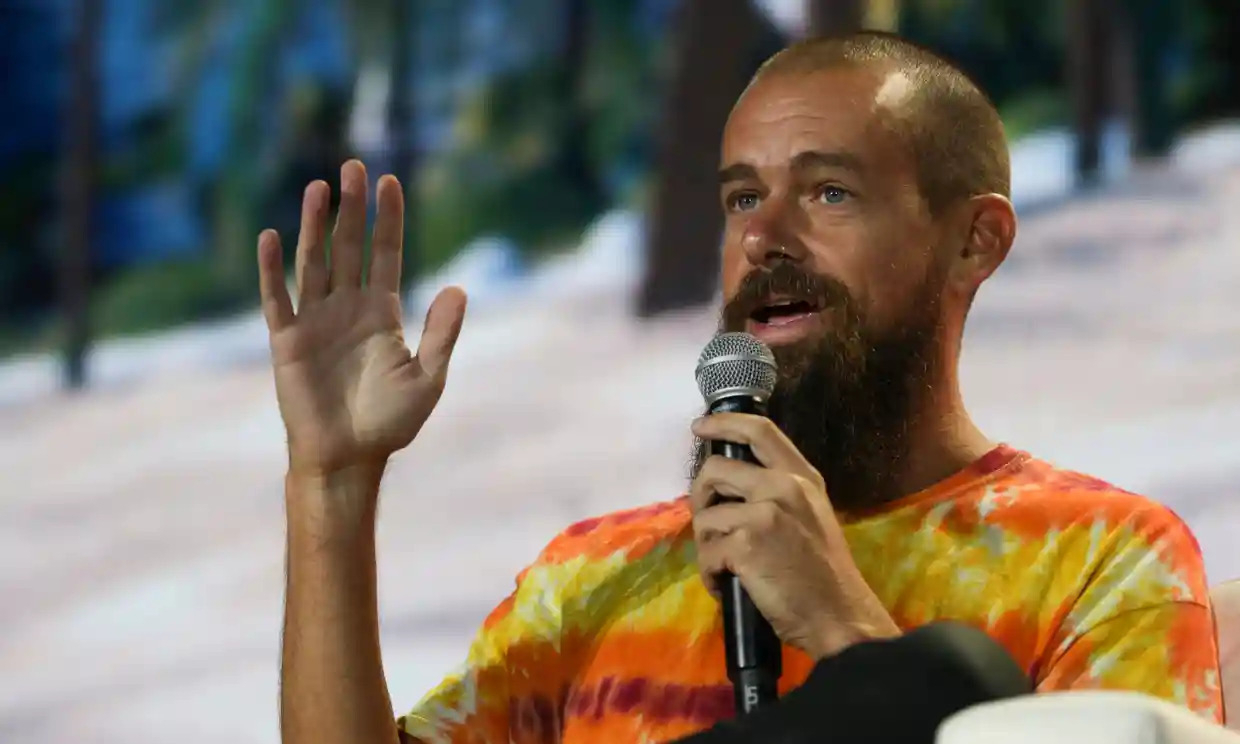
Photo below is of Jack Dorsey, former Twitter CEO, who also follows an ascetic lifestyle.
Who wants to live for ever? Not me, with all due respect to Freddie Mercury for asking, and possibly not you either. Only a third of Britons even want to make it to 100, according to a recent Ipsos poll carried out for the British not-for-profit initiative the Longevity Forum. This suggests less a death wish than a fear of what growing old may actually involve. Tellingly, the older the respondent already was, the less enthusiastic they were about getting very much older. Extreme age can look brutal, up close.Source: Who wants to live to 100 on a diet of lentil and broccoli slurry? Mostly rich men | The GuardianPersonally, I want very much to live until my child no longer needs me, whenever that may be, and to enjoy some kind of retirement. But beyond that, I just want to live until it feels like enough, and then ideally to have some control over the end. I’d rather have a busy, happy, meaningful life and drop dead at 75 than make it to 150 and run out of ways to fill the endless days.
Japanese miniature dioramas
I love these so much.

Miniature Calendar is an incredible ongoing project by Japanese artist Tatsuya Tanaka, that features beautiful miniature dioramas of everyday life using common household objects such as food, cloth, stationery, electronic devices, and even masks.Source: Japanese Artist Creates Amazing Miniature Dioramas Every Day For 10 Years | Digital Synopsis
(Partially) visualising the Fediverse
About a decade ago, it was possible to visualise your LinkedIn network. I really liked it, especially as I had three distinct groups of connections (EdTech, schools, and Higher Ed).
This website allows you to visualise around 4.5k Fediverse instances, as of last week. You can change the colour and size of the dots depending on number of users, posts, theme, etc.
Exercise.cafe isn’t on there, nor is wao.wtf. But it’s still a useful tool.

Source: Mapstodon
Collectively-owned Fediverse instances
I’m essentially bookmarking this publicly as it’s a useful reference for Fediverse instances (all currently running Mastodon!) which are collectively owned.
What I’m interested in is diversifying and going beyond this very useful list. First, I’d love examples to be added which are running other Fediverse software than Mastodon. For example, I’ve got a test instance of Misskey running at wao.wtf.
Second, I’m interested in the governance of these instances. If you’re not involved with co-operatives or other organisations that are democratically operated, it can seem like a bit of a black box. So I think we need a collaboratively-created guide to collective decision-making processes when it comes to Fediverse instances.

Fediverse instances with an explicit system of shared governance, usually made legally binding through an incorporated association or cooperative.Source: Collectively owned instances - fediparty | Codeberg.orgThis page will list also instances which are closed for registrations and dead instances, so that we can collectively learn from their experience.
Originally created by @nemobis@mamot.fr inspired by a @Matt_Noyes@social.coop thread.
Prestige and associational value
This is 100% true and one of the reasons that I think that Open Badges and Verifiable Credentials are so awesome. Associational value is built-in for human beings, as we’re social creatures who set store by what other people value.
For example, I’m Dr. Belshaw which has a certain cachet and status in some circles. But people are usually much more interested/impressed by the fact that I worked for Mozilla and that one of our co-op’s clients is Greenpeace.
Them’s the breaks. And I feel like passing on this kind of wisdom to the younger generations is really important, to be honest, as a way that the world actually works.
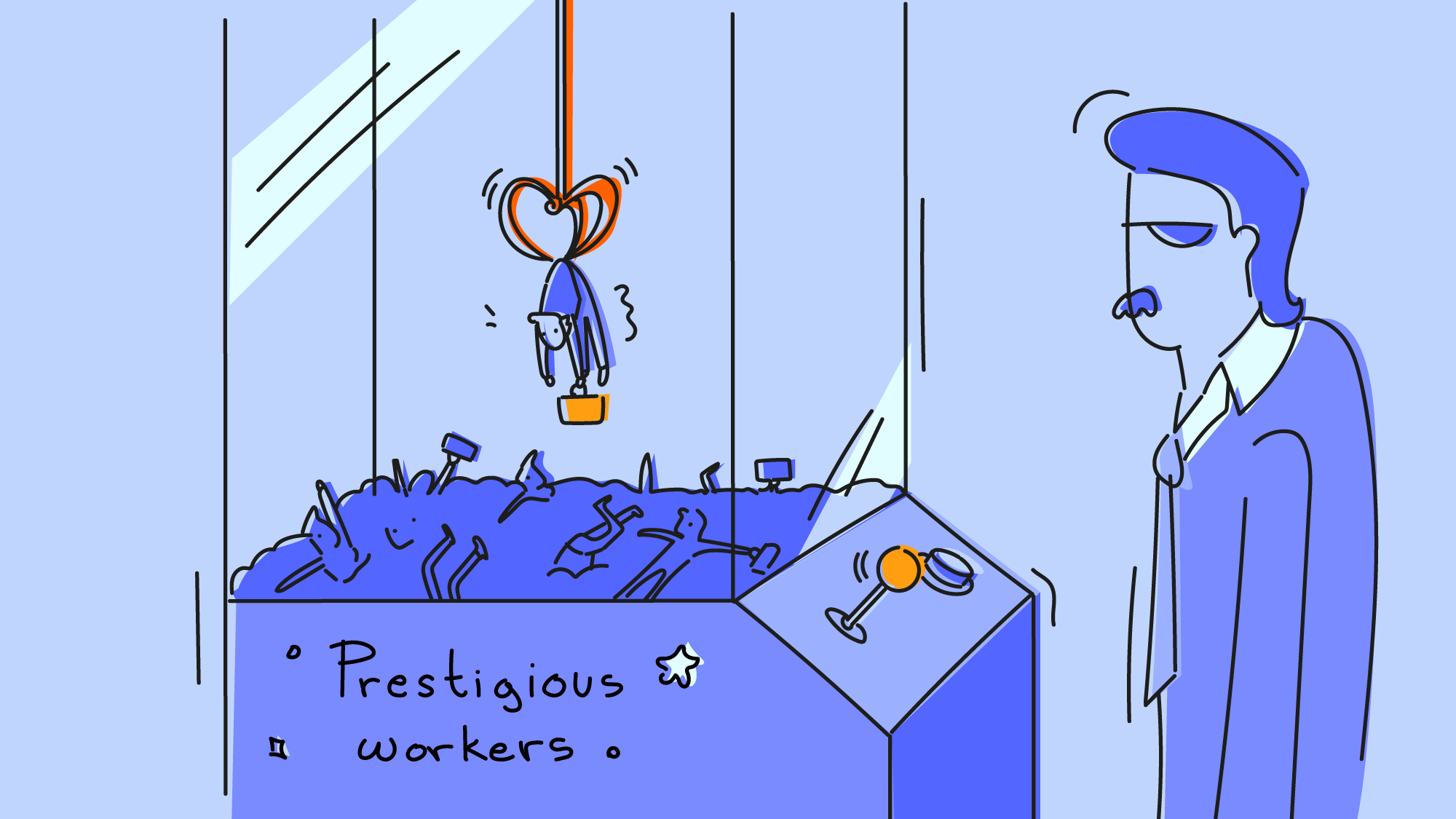
A lot of people suspect that having-been part of a prestigious organisation (such a a famous university or an "elite" org in your field) gets you an unfair advantage when applying for future jobs.Source: Associational Value | Atoms vs BitsThere are two main avenues you could imagine for this advantage. One is basically nepotism: through the organisation you meet lots of other people who will later give you preferential access to jobs.
A second avenue is throughthe associtional value of the institution: that people with no specific connection to you or that organisation will see the name of Prestigious Institution on your resume and hire you because, well, you were at Prestigious Institution.
[…]
I think associational value often comes out of single-sentence descriptions of what somebody has done, and that therefore there are often relatively-easy ways to get 99% of the associational benefits of a prestigious institution at a much lower cost.
For example, in the magazine-writing world, people are often (approximately) defined by 1-3 of the most famous publications they’ve ever written for: “X’s work has appeared in TK, TK and TK,” or “this is my friend Y, she writes for [famous media brand].”
[…]
I’m not entirely sure how to work around this one, beyond the “try to get a mild affiliation with a prestigious institution, even if it’s an incredibly silly one” hack.
Richard Hammond's near-death experience
Richard Hammond, co-presenter of the original Top Gear and The Grand Tour reflects on his near-death experience. Worth a watch.
[embed]www.youtube.com/watch
Source: Richard Hammond explains what he experienced during his coma | 310mph Crash | YouTube
Some tips for adding winter cheer
There are some excellent suggestions in this list of 53 things that can give you a lift over the winter months. I’ve highlighted three of my favourites below!

7. Walk with an audio book On a crisp winter’s day, there is no finer companion than 82-year-old actor Seán Barrett. His sublime narration of Mick Herron’s Slough House series, about a bunch of MI5 outcasts, will bring cheer to the gloomiest days.Source: Need a lift? Here’s 53 easy ways to add cheer to your life as winter looms | The Guardian[…]
18. Buy foods you can’t identify Purchase food in shops where the majority of products have no English on the packaging, so eating what you buy is an adventure. It might be black limes, a box of tamarinds or a rosewater drink with vermicelli pieces. It’s like travelling without travelling.
[…]
50. Sweat in a sauna We’ve all been told about the wellbeing boost of plunging into cold water, wild swimming and turning your shower down to freezing. But who wants to be cold? Book yourself into a sauna. Let the heat and steam soak deep into your bones and sweat out all your worries.
Convivial social networking
Adam Greenfield composed a thread this morning on Mastodon in which he referenced Ivan Illich’s call for conviviality. This was also referenced in a post by Audrey Watters which was shared a few minutes later in my timeline by Aaron Davis.
Such synchronicity is, of course, entirely random but meshed well with my state of mind this morning. I find it interesting that Audrey thinks it’s ridiculous to think that Mastodon is “what’s next” and instead looks to email. For what it’s worth, I see the Fediverse as being a lot like email, actually.
Given that she’s got a brain and experience several times the size of mine, I’d love it if she wrote more about this…

It's easy to look at the world right now and focus on the shit... The Republican takeover of the House. The economy. The way my body feels after running 6.85 miles on Sunday morning and then sitting in the car for 2+ hours on the drive home. The implosion of Twitter. The ridiculousness of suggesting Mastodon is "what's next." And so on. I mean, I have lots of thoughts on all of these, particularly the Twitter and Mastodon brouhaha. I read an email newsletter that referenced a Twitter thread in which Alexis Madrigal argued that Twitter, at least in its original manifestation, was for "word people." I quite like that framework, and it's helpful in showcasing how Facebook and now TikTok really would rather the ascendant influencers be picture people. TV people, even. It's time to pull out 'Tools for Conviviality', perhaps, for a re-read, because I'm loathe to make the argument that email is, in fact, where we find technological conviviality these days. But that's the direction I'm considering taking the argument. If I were to write about it and think about it more, that is.Source: The Week in Review: What's Good | Audrey Watters
Mourning what we've lost
I found this an eloquent explanation of emotions and feelings I've experienced over the last couple of weeks as the Fediverse has been 'invaded' by people considering themselves 'refugees' from Twitter.
As Hugh Rundle points out in this post, some of us have already mourned what we'd lost with Twitter and had made our home in a comfy, homely new place. There were rules, both implicit and explicit, about how to behave, but now...

For those of us who have been using Mastodon for a while (I started my own Mastodon server 4 years ago), this week has been overwhelming. I've been thinking of metaphors to try to understand why I've found it so upsetting. This is supposed to be what we wanted, right? Yet it feels like something else. Like when you're sitting in a quiet carriage softly chatting with a couple of friends and then an entire platform of football fans get on at Jolimont Station after their team lost. They don't usually catch trains and don't know the protocol. They assume everyone on the train was at the game or at least follows football. They crowd the doors and complain about the seat configuration.
It's not entirely the Twitter people's fault. They've been taught to behave in certain ways. To chase likes and retweets/boosts. To promote themselves. To perform. All of that sort of thing is anathema to most of the people who were on Mastodon a week ago. It was part of the reason many moved to Mastodon in the first place. This means there's been a jarring culture clash all week as a huge murmuration of tweeters descended onto Mastodon in ever increasing waves each day. To the Twitter people it feels like a confusing new world, whilst they mourn their old life on Twitter. They call themselves "refugees", but to the Mastodon locals it feels like a busload of Kontiki tourists just arrived, blundering around yelling at each other and complaining that they don't know how to order room service. We also mourn the world we're losing.
[...]
I was a reasonably early user of Twitter, just as I was a reasonably early user of Mastodon. I've met some of my firmest friends through Twitter, and it helped to shape my career opportunities. So I understand and empathise with those who have been mourning the experience they've had on Twitter — a life they know is now over. But Twitter has slowly been rotting for years — I went through that grieving process myself a couple of years ago and frankly don't really understand what's so different now compared to two weeks ago.
There's another, smaller group of people mourning a social media experience that was destroyed this week — the people who were active on Mastodon and the broader fediverse prior to November 2022. The nightclub has a new brash owner, and the dancefloor has emptied. People are pouring in to the quiet houseparty around the corner, cocktails still in hand, demanding that the music be turned up, walking mud into the carpet, and yelling over the top of the quiet conversation.
All of us lost something this week. It's ok to mourn it.
Source: Home invasion | Hugh Rundle
Image: Joshua Sukoff
Second-order effects of widespread AI
Sometimes ‘Ask HN’ threads on Hacker News are inane or full of people just wanting to show off their technical knowledge. Occasionally, though, there’s a thread that’s just fascinating, such as this one about what might happen once artificial intelligence is widespread.
Other than the usual ones about deepfakes, porn, and advertising (all which should concern us) I thought this comment by user ‘htlion’ was insightful:
AI will become the first publisher of contents on any platform that exists. Will it be texts, images, videos or any other interactions. No banning mechanisms will really help because any user will be able to copy-paste generated content. On top of that, the content will be generated specifically for you based on "what you like". I expect a backlash effect where people will feel like becoming cattle which is fed AI-generated content to which you can't relate. It will be even worse in the professional life where any admin related interaction will be handled by an AI, unless you are a VIP member for this particular situation. This will strengthen the split between non-VIP and VIP customers. As a consequence, I expect people to come back to localilty, be it associations, sports clubs or neighborhood related, because that will be the only place where they will be able to experience humanity.Source: What will be the second order effects widespread AI? | Hacker News
Hyperbolic discounting applied to habit-formation
We live near the middle of town, a five minute walk to the leisure centre — and less than that to get to the shops. As a result, we don’t use our cars at all for three days of the week, and I go to the gym at the leisure centre every day.
My grandmother, who wasn’t well-off and who rented all her life, used to ensure that she lived right next to a bus stop. Although she wouldn’t have used the phrase from this article, she knew that she was more likely to travel and get places that way!

You may have heard of hyperbolic discounting from behavioral economics: people will generally disproportionally, i.e. hyperbolically, discount the value of something the farther off it is. The average person judges $15 now as equivalent to $30 in 3-months (an annual rate of return of 277%!).Source: Hyperbolic Distance Discounting | Atoms vs Bits[…]
But what about when something is farther off in space rather than time?
Say a 1-hour activity is 10 minutes away, compared to 5 minutes away. The total time usage would be 80 vs 70 minutes, about 15% longer. A linear model would predict that it would feel 15% more costly, and then proportionally affect your likelihood of going. In practice though, an extra 10 or 20 minutes of travel time will somehow frequently nudge you into non-participation.
The (surprising) oldest full sentence in the Canaanite language in Israel
Apparently this comb has an inscription on it which reads “May this tusk root out the lice of the hair and the beard.” It was made from an imported elephant tusk!

The comb measures just 3.5 by 2.5 centimeters (roughly 1.38 by 1 inches), with teeth on both sides, although only the bases remain; the rest of the teeth were likely broken long ago. One side had thicker teeth, the better to untangle knots, while the other had 14 finer teeth, likely used to remove lice and their eggs from beards and hair. Further analysis showed noticeable erosion at the comb's center, which the authors believe was likely due to someone's fingers holding it there during use.Source: Ancient wisdom: Oldest full sentence in first alphabet is about head lice | Ars TechnicaThe authors also used X-ray fluorescence spectroscopy, Fourier-transform infrared spectroscopy, and digital microscopy to confirm that the comb is made of ivory from an elephant tusk, suggesting it was imported. The team sent a sample from the comb to the University of Oxford’s radiometric laboratory, but the carbon was too poorly preserved to accurately date the sample.
The inscription consists of 17 letters (two damaged) that together form a complete seven-word sentence. The letters aren’t well-aligned, per the authors, nor are they uniform in size; the letters become progressively smaller and lower in the first row, with letters running from right to left. When whoever engraved the comb reached the edge, they turned it 180 degrees and engraved the second row from left to right. The engraver actually ran out of room on the second row, so the final letter is engraved just below the last letter in that row. Still, said engraver had to be fairly skilled, given the small size of the lettering.
Rituals for moving jobs when working from home
Terence Eden reflects on changing jobs when working from home and how… weird it can be. While I’ve been based from two different converted garages during the past decade, I’ve travelled a lot so it has felt different.
I can imagine, though, if that’s not the case, it can all feel a little bit discombobulating!

One Friday last year, I posted some farewell messages in Slack. Removed myself from a bunch of Trello cards. Had a quick video call with the team. And then logged out of my laptop. I walked out of my home office and sat in my garden with a beer.Source: Job leaving rituals in the WFH era | Terence Eden’s BlogThe following Monday I opened the door to the same office. I logged in to the same laptop. I logged into a new Slack - which wasn’t remarkably different from the old one. Signed in to a new Trello workspace - ditto. And started a video call with my new team.
I’ll admit, It didn’t feel like a new job!
There was no confusing commute to a new office. No having to work out where the toilets and fire exits were. No “here’s your desk - it’s where John used to sit, so people might call you John for a bit”. I didn’t even have to remember people’s names because Zoom showed all my colleagues' names & job titles.
There was no waiting in a liminal space while receptionists worked out how to let me in the building.
In short, there was no meaningful transition for me.
Decentralisation begins at decentring yourself
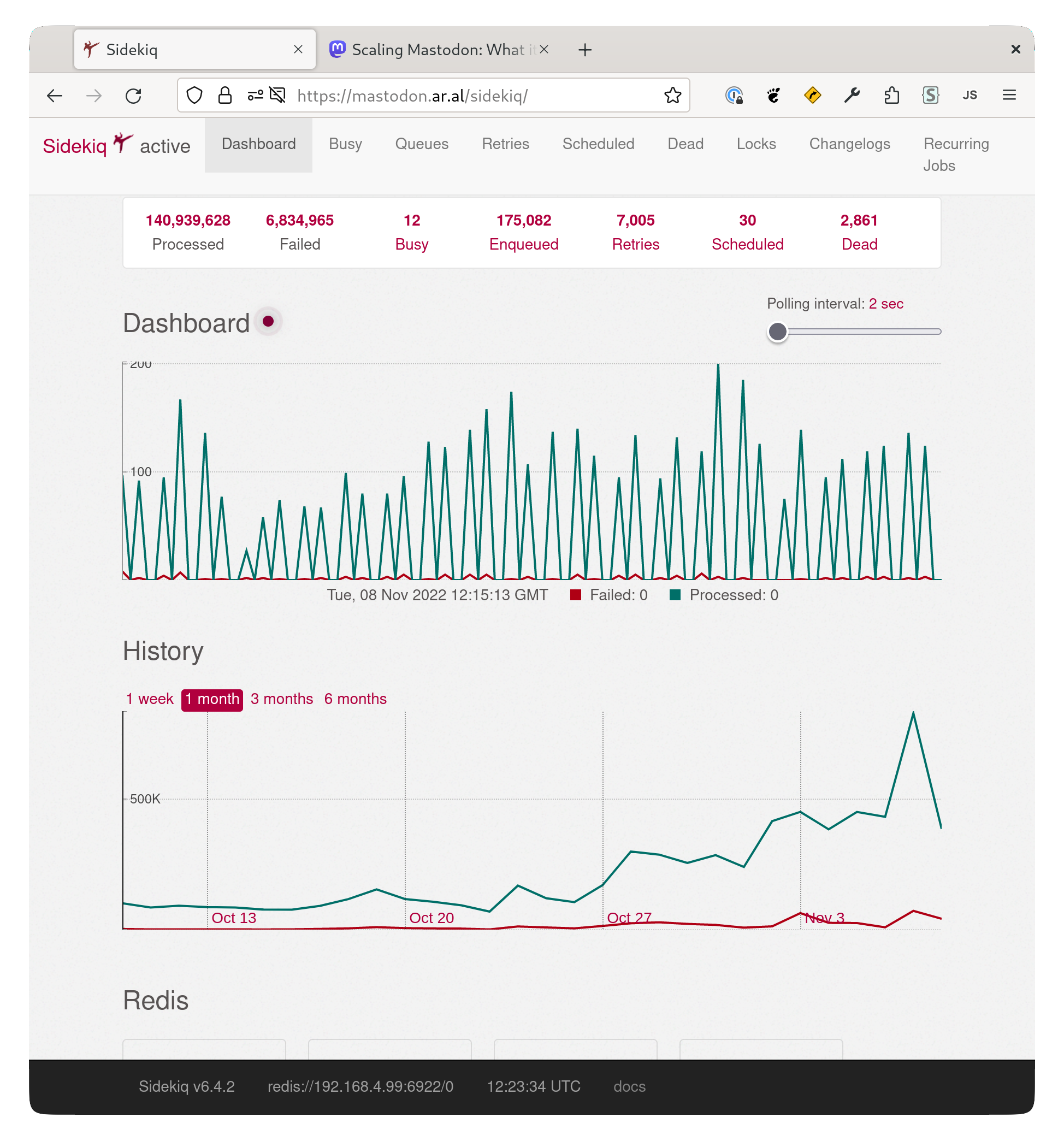
Aral Balkan, who has 22,000 followers on the Fediverse and who recently had a birthday, has written about the influx of people from Twitter. As I’ve found, especially on my personal blog, you can essentially run a Distributed Denial of Service (DDoS) attack on yourself by posting a link to your blog to the Fediverse. As each server pings it, the server can eventually buckle under the weight.
What follows is a really useful post in terms of Aral’s journey towards what he calls the ‘Small Web’. While I don’t necessarily agree that we should all have our own instances, I do think it’s useful for organisations of every size to run them.
If Elon Musk wanted to destroy mastodon.social, the flagship Mastodon instance, all he’d have to do is join it.Thank goodness Elon isn’t that smart.
I jest, of course… Eugen would likely ban his account the moment he saw it. But it does illustrate a problem: Elon’s easy to ban. Stephen, not so much. He’s a national treasure for goodness’ sake. One does not simply ban Stephen Fry.
And yet Stephen can similarly (yet unwittingly) cause untold expense to the folks running Mastodon instances just by joining one.
The solution, for Stephen at least, is simple: he should run his own personal instance.
(Or get someone else to run it for him, like I do.)
Running his own instance would also give Stephen one additional benefit: he’d automatically get verified.
After all, if you’re talking to, say, @stephen@social.stephenfry.com, you can be sure it’s really him because you know he owns the domain.
Organisations are not just joining the Fediverse, they're setting up their own instances
It’s great to see that Raspberry Pi Ltd. and other organisations are setting up their own servers. Not only does it enable them to verify themselves, but that of their employees and affiliates really easily.
I’m sure it won’t all be smooth sailing ahead for the Fediverse, especially when it comes to trust and verification. But I’m optimistic that the recent migration from Twitter is ultimately for the good of the human species.

We’ve opted to host our own instance. We’ve done this because, with multiple instances out there, we had to decide how to make sure people following us knew that our Raspberry Pi account was the “real” one.Source: An escape pod was jettisoned during the fighting | Raspberry PiDistributed systems are an interesting corner case when it comes to trust. Because when it comes to identity, you eventually have to trust someone. Whether that’s a corporation, like Twitter, or a government, or the person themselves. Trust is needed.
With Mastodon the root of trust for identity is the admin of the instance you’re on, and the admins on all the other instances, where you’re trusting them to remove “fake” accounts. Or, if you’re running your own instance, then it’s the domain name registrars. The details of our domain registration of the
raspberrypi.socialdomain may be redacted for privacy, but our domain registrar knows who we are, and is the same registrar we use for all our other domains. They trust our government-issued identity to prove that we are Raspberry Pi Ltd. You can trust them, they trust the government, and ultimately the government trusts us because they can use Ultima Ratio Regum, the last argument of kings.
A cluttered desk is a sign of genius
Perhaps it's because I'm not a designer like the author of this post, but organising your desk space like this leaves me cold. My space looks like this.

I’m proud of what I’ve done with my desk setup over the last five years. Through careful observation of what’s working and what’s not, I’ve continued to improve how it serves my creative pursuits. Still, when I look at it in the morning, I get a rush of creative energy and optimism.
Source: The Evolution of the Desk Setup | Arun
Quotation-as-title comes from a plaque my father had on his (spectacularly untidy) desk...
Decentralising online learning
A “technical presentation that is structured and designed for a non-technical audience” by Stephen Downes. With the Twitter lifeboats again being deployed, this is a timely look at how federated and decentralised technologies can be used for removing the silos from online learning.

Source: Open Learning in the Fediverse | Stephen DownesAs a new generation of digital technologies evolves we are awash in new terms and concepts: the metaverse, the fediverse, blockchain, web3, acitivitypub, and more. This presentation untangles these concepts and presents them from the perspective of their impact on open learning.
Presenteeism, overwork, and being your own boss
I spend a lot of time on the side of football pitches and basketball courts watching my kids playing sports. As a result, I talk to parents and grandparents from all walks of life, who are interested in me being a co-founder of a co-op — and that, on average, I work five-hour days.
This wasn’t always the case, of course. I’ve been lucky, for sure, but also intentional about the working life I want to create. And I’m here to tell you that unless you at least partly own the business you work for, you’re going to be overworking until the end of your days.

Hidden overwork is different to working long hours in the office or on the clock at home – instead, it’s the time an employee puts into tasks on top of their brief. There are plenty of reasons people take on this extra work: to be up to speed in meetings; appear ‘across issues’ when asked about industry developments; or seem sharp in an environment in which a worker is still trying to establish themselves.Source: The hidden overwork that creeps into so many jobs | BBC WorklifeThere are myriad ways a person’s day job can slip into their non-working hours: think a worker chatting to someone from their industry at their child’s birthday party, and suddenly slipping into networking mode. Or perhaps an employee hears their boss mention a book in a meeting, so they download and listen to it on evening walks for a week, stopping occasionally to jot down some notes.
[…]
However, for many, this overwork no longer feels like a choice – and that’s when things go bad. This can especially be the case, says [Alexia] Cambon [director of research at workplace-consultancy Gartner’s HR practice], when these off-hours tasks become another form of presenteeism – for instance, an employee reading a competitor’s website and sharing links in a messaging channel at night, just so they can signal to their boss they’re always on. “We’re seeing… more employees who feel monitored by their organisations, and then feel like they have to put in extra hours,” she says.
As such, this hidden overwork can do a lot of potential damage if it becomes an unspoken requirement. “If there’s more expectation and burden associated with it, that’s where people are going to have negative consequences,” says Nancy Rothbard, management professor at The Wharton School of the University of Pennsylvania, US. “That’s where it becomes tough on them.”
Hyperfinancialisation has taken over UK politics
I’m reading This Could Be Our Future by (Kickstarter co-founder) Yancey Strickler at the moment. It rails against hyperfinancialisation and then provides a way of thinking about the world differently.
As this opinion piece in The Guardian points out, we need a way of thinking about politics and the market which isn’t driven (literally!) by investment bankers.

Rishi Sunak’s first job was at the US investment bank Goldman Sachs. He went on to spend 14 years in the sector before becoming an MP. In many ways, his unelected appointment marks the highpoint of big finance’s takeover of Britain’s political and economic system – a quiet infiltration of Westminster and Whitehall has been taking place over several decades and gone largely unremarked.Source: With Rishi Sunak, the City’s takeover of British politics is complete | Aeron Davis[…]
Looking at the coalition government, every senior figure who managed Treasury economic policy – George Osborne, Danny Alexander, David Cameron, Rupert Harrison, John Kingman and Nick Macpherson – later gained well-paid positions in the financial sector. And three of the last five chancellors have come from the sector. Jeremy Hunt’s current advisers all come from investment banking.
This matters because investment bankers have very little to do with the real economy that ordinary people inhabit. They don’t run businesses. They don’t deal with actual product and customer markets. Their work is confined to financial markets, aiding corporate financial manoeuvres, and trading and managing their own financial assets. Their primary aim is to make profits from such activities, regardless of how it affects the real economy, the national interest or employees. If that means shorting the pound or breaking up a successful company for quick profits, then so be it.
[…]
And an overpowered financial sector has certainly not been conducive to good governance, either. There’s nothing democratic about extensive public service cuts being used to pay for saving the private banking sector, as in the aftermath of the 2008 crash, or the bond markets determining the credibility of governments, or the fact that the bankers and hedge funds are the biggest single source of Conservative party donations. Nor is trust in British democracy likely to be enhanced by a super-rich PM who has allegedly avoided taxes and made a fortune as a financier at the nation’s cost.