New genres are emerging that exploit cognitive and moral resources in ways that did not have technological pathways before
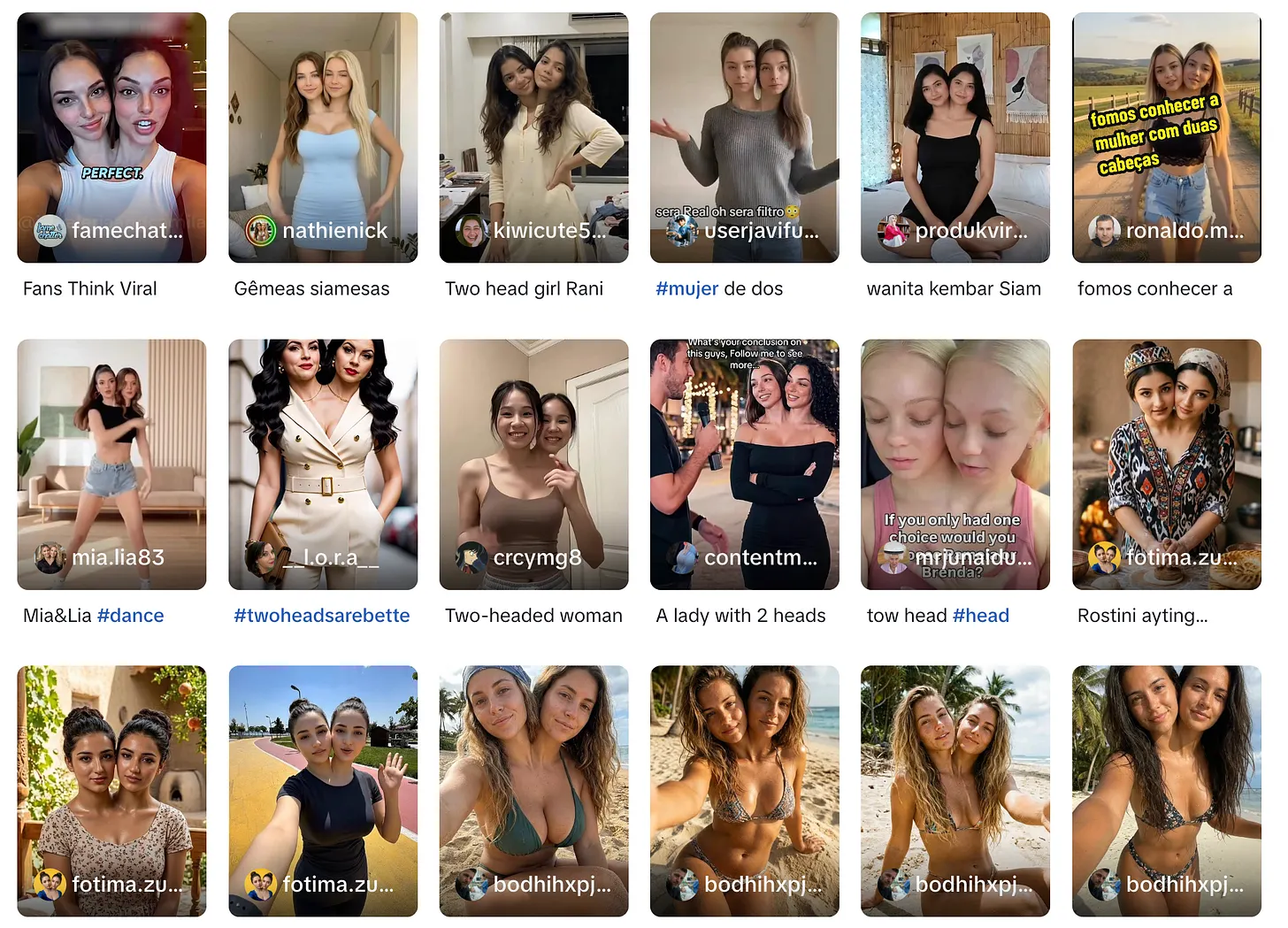
Marcus Bösch with a really interesting insight into the aesthetics of TikTok through the use of some weird examples. He uses the work of Steyerl (2023), Meyer (2025), and Toister & Zylinska (2025) to explain it all. Well worth clicking through and reading the whole thing.
Slop strategies have been evolving ever since Jesus sat down on a huge shrimp in 2024. AI content production is now sophisticated enough to invent new affective hooks that did not previously exist.
New genres are emerging that exploit cognitive and moral resources in ways that did not have technological pathways before.
[…]
Roland Meyer argues that AI-generated images are optimised not against the real world but against other images already in circulation. They are trained on billions of platform images and rewarded for matching what viewers already expect to see. Meyer, building on a term from Jacob Birken, calls this platform realism — a realism that has nothing to do with reality and everything to do with image-familiarity.
[…]
Meyer adds one more thing worth keeping. AI-generated images, he points out, are “disposable by design.” Producers generate dozens to find one that engages. Most are never seen.
[…]
Every time you see an AI-generated image — even one you know is fake, even one you mock or scroll past fast — the type it represents becomes a tiny bit more familiar to your imagination. Across thousands of variants seen by millions of viewers, this slowly changes what feels normal, what feels imaginable, what counts as a recognisable shape in the world.
[…]
We are still at the beginning of a transformative technology whose effects we can barely measure — partly because the changes sit just below the threshold of attention. A weird video here, a strange video there, and yet each one is part of a process that is shifting how we consume media and what we treat as something ordinary.
Source: Understanding TikTok