
Scamming tourists in Nepal
This is wild 🤯
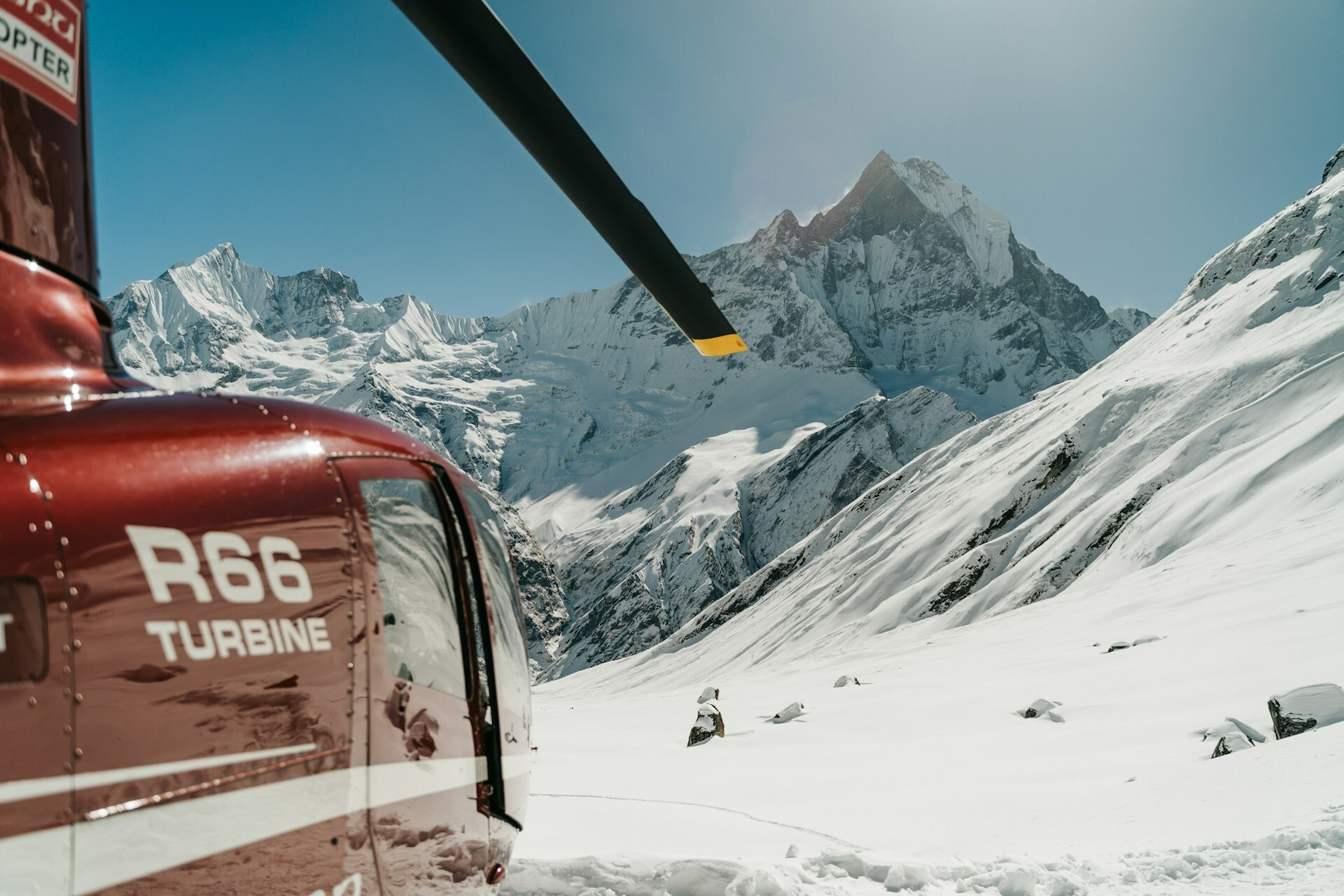
The mechanics of the fake rescue racket are straightforward: stage a medical emergency, call in a helicopter, check a tourist into a hospital, and file an insurance claim that bears little resemblance to what actually happened. But the sophistication lies in how each link in the chain is compensated, and how difficult it is for a foreign insurer — operating from Australia and the United Kingdom— to verify events that occurred at 3,000 metres in a remote Himalayan valley.
The CIB investigation identifies two primary methods for manufacturing an “emergency.”
The first involves tourists who simply don’t want to walk back. After completing a demanding trek — an Everest Base Camp trek, for instance, can take up to two weeks on foot — guides offer an alternative: pretend to be sick, and a helicopter will come. The guide handles the rest.
The second method is more troubling. At altitudes above 3,000 metres, mild symptoms of altitude sickness are common. Blood oxygen saturation can drop, hands and feet tingle, headaches develop. In most cases, rest, hydration or a gradual descent is all that is needed. But guides and hotel staff, according to the CIB investigation, have been trained to terrify trekkers at precisely this moment. They tell them they are at risk of dying, that only immediate evacuation will save them. In some cases, investigators found that Diamox (Acetazolamide) tablets, used to prevent altitude sickness, were administered alongside excessive water intake to induce the very symptoms that would justify a rescue call.
In at least one case cited in the investigation, baking powder was mixed into food to make tourists physically unwell.
Once a “rescue” is called, the financial choreography begins. A single helicopter carries multiple passengers. But separate, full-price invoices are submitted to each passenger’s insurance company, as if each had their own dedicated flight. A $4,000 charter becomes a $12,000 claim. Fake flight manifests and load sheets are fabricated. At the hospital, medical officers prepare discharge summaries using the digital signatures of senior doctors who were never involved in the case. In some cases, these are done without those doctors’ knowledge. Fake admission records are created for tourists who were, in some documented instances, drinking beer in the hospital cafeteria at the time they were supposedly receiving treatment.
[…]
Between 2022 and 2025, investigators identified 4,782 foreign patients treated across the implicated hospitals. Of these, 171 cases were confirmed as fake rescues. Over that period, Era International Hospital received deposits of more than $15.87 million linked to these activities. Shreedhi International Hospital received over $1.22 million.
Among rescue operators, Mountain Rescue Service conducted 171 fraudulent rescues out of 1,248 total charter flights, claiming approximately $10.31 million from insurers. Nepal Charter Service carried out 75 fake rescues from 471 flights, claiming $8.2 million. Everest Experience and Assistance was linked to 71 suspicious rescues from 601 flights, with insurance claims totalling $11.04 million.
In one instance that illustrates the brazenness of the scheme, police documented a case in which four tourists were rescued on a single helicopter flight, on the same date, using the same helicopter and manifest. Insurance claims were nonetheless submitted as multiple separate rescues, with the total rescue bill reaching $31,100, plus a separate hospital bill of $11,890.
Source: The Kathmandu Post
Image: Alexander Aashiesh