
Brexit is a problem whose name we now dare speak
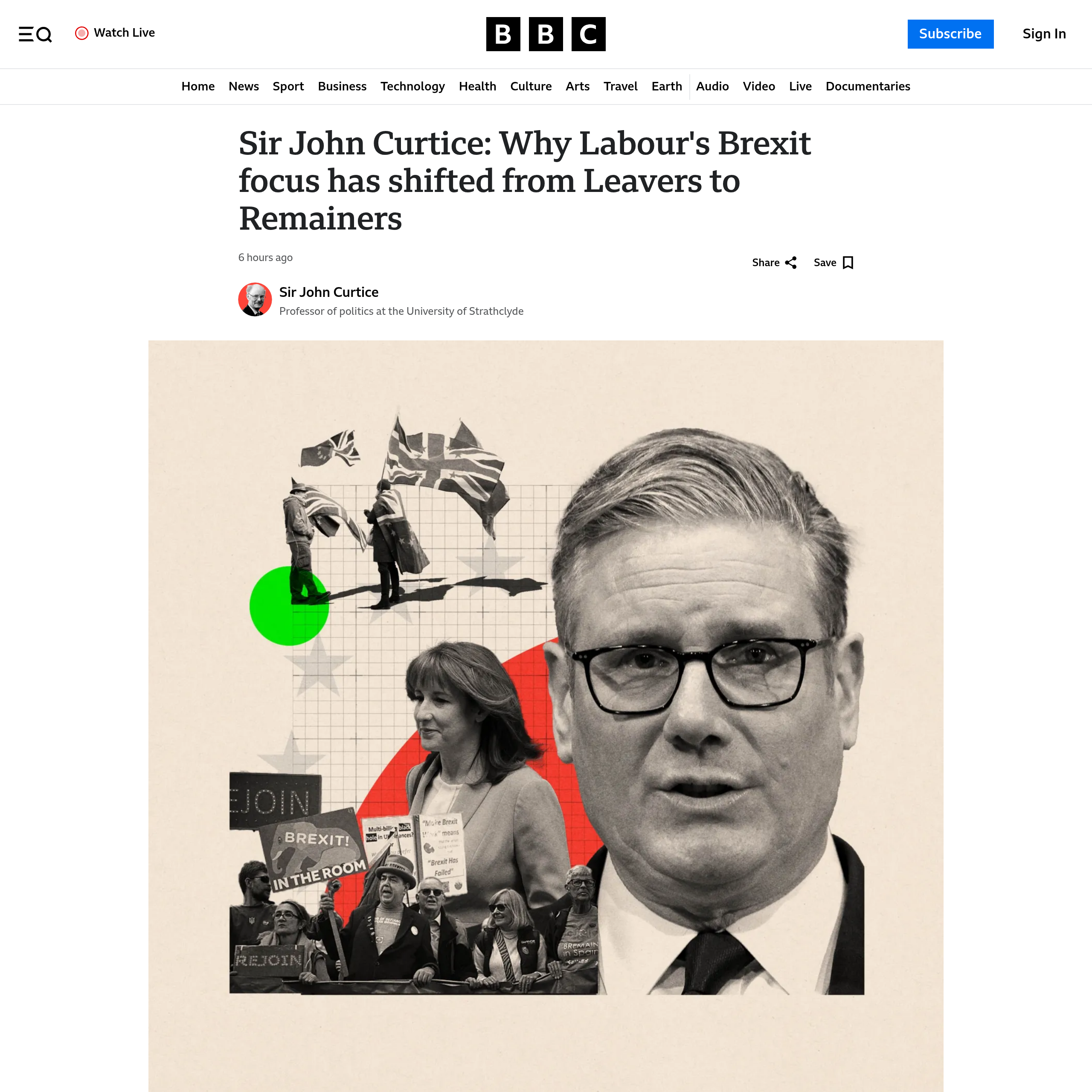
It’s almost a decade since one of the greatest economic harms a country has ever self-inflicted. Yes, I’m talking about Brexit.
Finally, we’re getting to the stage when our current government, which is not the one that instigated the referendum, can say that “Brexit did deep damage”. Let’s hope we get back into bed with our European neighbours ASAP. The decline in Britain over the last 10 years is tangible.
“Brexit did deep damage.” With those words at her Mais lecture on Tuesday, Chancellor Rachel Reeves made it clear that there has been an important shift within the Labour Party - one that government ministers have been signalling for some time.
“Let me say this directly to our friends and allies in Europe. This government believes a deeper relationship is in the interest of the whole of Europe,” she said, while at the same time insisting that the government was not trying to “turn back the clock” on Brexit.
Speaking in such overt terms about Brexit’s perceived harms in part reflects a belief that, as the government attempts to turn around the country’s persistently sluggish economic performance, it must be more ambitious in its attempt to “reset” the UK’s post-Brexit relationship with the EU.
[…]
Speaking at a literary festival in October, Wes Streeting, the health secretary, said: “I’m glad that Brexit is a problem whose name we now dare speak,” and indicated that he believed being outside the EU was making it difficult to deliver the economic growth the government had promised.
The deputy prime minister, David Lammy, said in a podcast that it was “self-evident” that Brexit had damaged the economy and noted the economic benefit that Turkey had derived from its customs agreement with the EU.
Meanwhile, in further evidence of pressure within Labour’s ranks to rethink its policy on Brexit, on Wednesday the London Mayor, Sadiq Khan, called for the UK to rejoin the EU customs union and single market before the next election, and then campaign at that ballot on a promise to rejoin the EU.
Source: BBC News