A range of authentic selves?
Jo Hutchinson reshared this on LinkedIn a few days ago, and I wanted to save/share my comments on it. The original post was by Tricia Riddell, a Professor of Applied Neuroscience and includes a short video. In it, she talks about there being “a range of authentic selves” that people can bring to a situation rather than a single “authentic self.”
Riddell wonders whether this is what leads to imposter syndrome, which is usually suffered by high-achievers. “You cannot feel like an imposter,” she says, “unless there is something you believe you’re failing to live up to.”
My response, because it’s easier for me to re-find things here rather than on social media:
As someone who suffers from imposter syndrome most days of my life, it resonates.
I am, though, reminded of something that John Bayley wrote in one of the biographies of his wife, the philosopher Iris Murdoch. He said that Iris believed that she “didn’t have a strong sense of self.” I’ve thought about this over two decades, and I think it maps onto what’s being discussed here.
On the one hand, you could say that those with a strong sense of self want to bring a single “authentic” self to every situation. Which, as Tricia Riddell points out, would mean that they’re not bringing other stories into the situation.
Or, on the other hand, you might say that those without a strong sense of self have a fragmented view of themselves. The imposter syndrome is the price that is paid for an integrated sense of self.
I haven’t figured it out yet, but I find the whole thing fascinating.
Source: LinkedIn
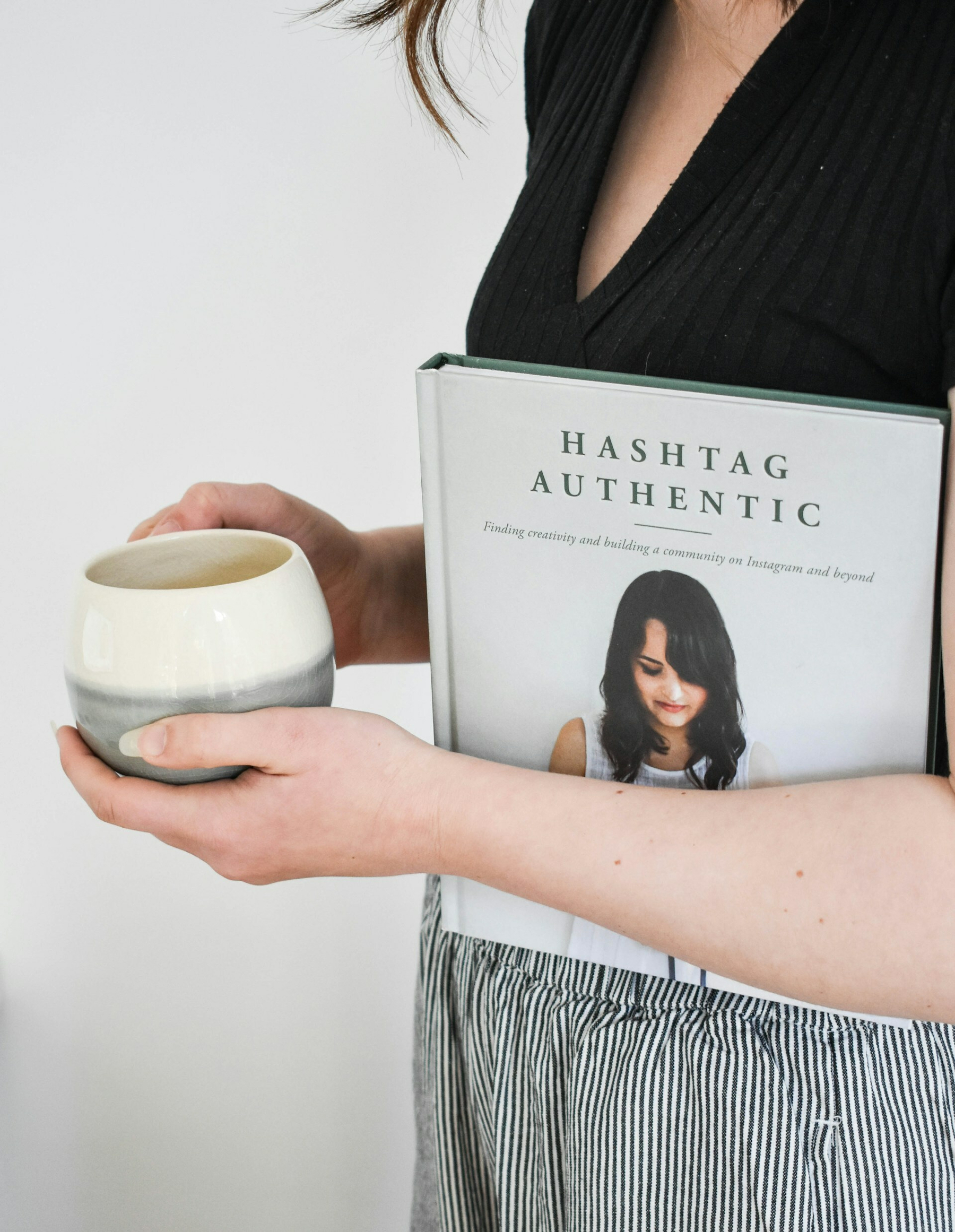
Image: Amy Vann