
Covid and heart attacks
Curiously, I discovered this via Hacker News, which linked to an news article about it that I couldn’t access in the UK. I guess they hadn’t got their GDPR act together. So I’m sharing a link to the original journal article.
What’s interesting to me about this is that my heart hasn’t been the same since I had Covid this time last year. And sure enough, the research in this article shows that deaths from acute myocardial infarctions (i.e. heart attacks) have gone up by a third for my age group. Makes you think.

The COVID-19 pandemic has had a detrimental impact on the healthcare system. Our study armed to assess the extent and the disparity in excess acute myocardial infarction (AMI)-associated mortality during the pandemic, through the recent Omicron outbreak. Using data from the CDC's National Vital Statistics System, we identified 1 522 669 AMI-associated deaths occurring between 4/1/2012 and 3/31/2022. Accounting for seasonality, we compared age-standardized mortality rate (ASMR) for AMI-associated deaths between prepandemic and pandemic periods, including observed versus predicted ASMR, and examined temporal trends by demographic groups and region. Before the pandemic, AMI-associated mortality rates decreased across all subgroups. These trends reversed during the pandemic, with significant rises seen for the youngest-aged females and males even through the most recent period of the Omicron surge (10/2021–3/2022). The SAPC in the youngest and middle-age group in AMI-associated mortality increased by 5.3% (95% confidence interval [CI]: 1.6%–9.1%) and 3.4% (95% CI: 0.1%–6.8%), respectively. The excess death, defined as the difference between the observed and the predicted mortality rates, was most pronounced for the youngest (25–44 years) aged decedents, ranging from 23% to 34% for the youngest compared to 13%–18% for the oldest age groups. The trend of mortality suggests that age and sex disparities have persisted even through the recent Omicron surge, with excess AMI-associated mortality being most pronounced in younger-aged adults.Source: Excess risk for acute myocardial infarction mortality during the COVID‐19 pandemic | Journal of Medical Virology
Hiring people without degrees
This is my commentary on Bryan Alexander’s commentary of an Op-Ed in The New York Times. You’d think I’d be wholeheartedly in favour of fewer jobs requiring a degree and, I am, broadly speaking.
However, and I suppose I should write a more lengthy piece on this somewhere, I am a little concerned about jobs becoming credential-free and experience-free experiences. Anecdotally, I’ve found that far from CVs and resumes being on the decline, they’re being used more than ever — along with rounds and rounds of interviews that seem to favour, well… bullshitters.

At a broader level, I find the Times piece fitting into my peak higher education model in a quiet way. The editorial doesn’t explicitly call for fewer people to enroll in college, but does recommend that a chunk of the population pursue careers without post-secondary experience (or credentials). In other words, should public and private institutions heed the editorial, we shouldn’t expect an uptick in enrollment, but more of the opposite.Source: Employers, hire more people without college degrees, says the New York Times | Bryan AlexanderWhich brings me to a final point. I’ve previously written about a huge change in how Americans think about higher ed. For a generation we thought that the more people get more college experience, the better. Since 2012 or so there have been signs of that national consensus breaking down. Now if the New York Times no longer shares that inherited model, is that shared view truly broken?
Reasons for not writing
One of the reasons I continue with Thought Shrapnel is because it’s an easy way to ‘blog’ when I don’t feel like writing something from scratch.
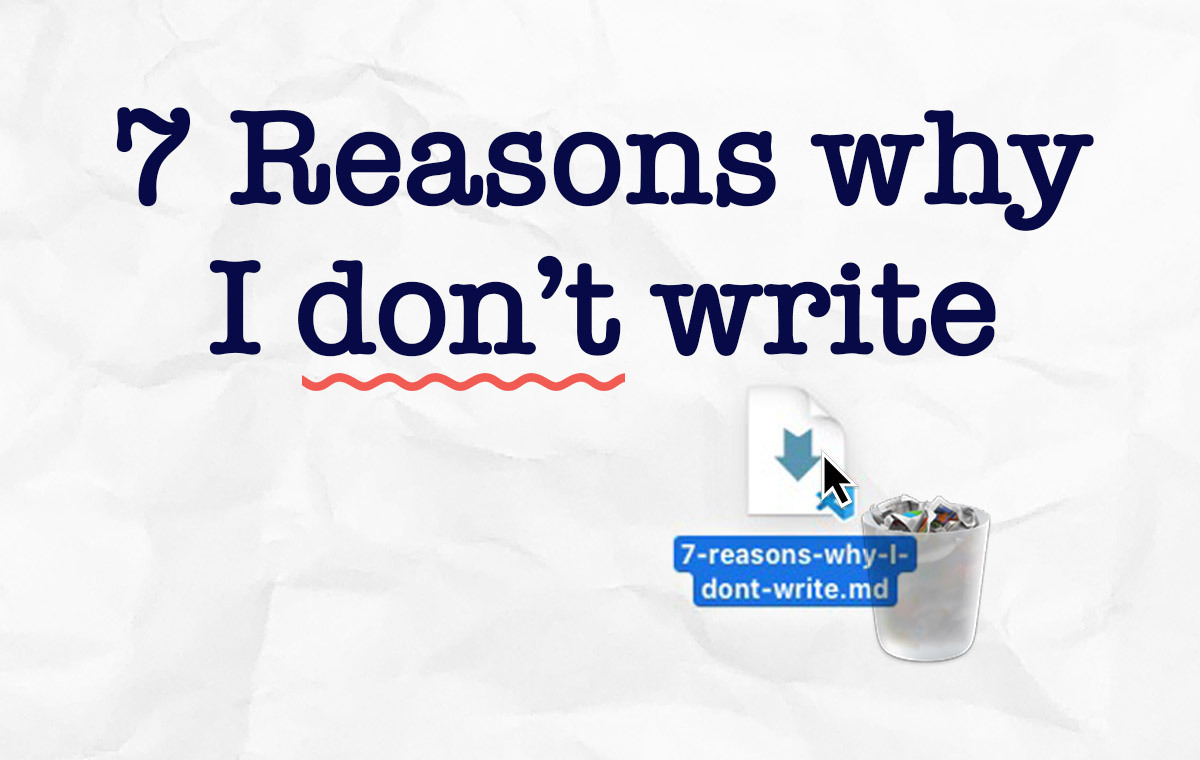
I came up with seven reasons that I use to justify why I’m not writing. In a confusing twist of perspective, I’m also going to try and talk myself out of them by explaining to you, dear Reader, why they are bullshit.The seven reasons?
- I don't have time
- I don't have anything interesting to say
- I gotta fix [X] on my site first
- Others have already written about this
- The moment for this has passed
- I can’t get it to sound right
- Nobody’s going to read it anyway
Should we "resist trying to make things better" when it comes to online misinformation?
This is a provocative interview with Alex Stamos, “the former head of security at Facebook who now heads up the Stanford Internet Observatory, which does deep dives into the ways people abuse the internet”. His argument is that social media companies (like Twitter) sometimes try to hard to make the world better, which he thinks should be “resisted”.
I’m not sure what to make of this. On the one hand, I think we absolutely do need to be worried about misinformation. On the other, he does have a very good point about people being complicit in their own radicalisation. It’s complicated.
I think what has happened is there was a massive overestimation of the capability of mis- and disinformation to change people’s minds — of its actual persuasive power. That doesn’t mean it’s not a problem, but we have to reframe how we look at it — as less of something that is done to us and more of a supply and demand problem. We live in a world where people can choose to seal themselves into an information environment that reinforces their preconceived notions, that reinforces the things they want to believe about themselves and about others. And in doing so, they can participate in their own radicalization. They can participate in fooling themselves, but that is not something that’s necessarily being done to them.Source: Are we too worried about misinformation? | Vox[…]
The fundamental problem is that there’s a fundamental disagreement inside people’s heads — that people are inconsistent on what responsibility they believe information intermediaries should have for making society better. People generally believe that if something is against their side, that the platforms have a huge responsibility. And if something is on their side, [the platforms] should have no responsibility. It’s extremely rare to find people who are consistent in this.
[…]
Any technological innovation, you’re going to have some kind of balancing act. The problem is, our political discussion of these things never takes those balances into effect. If you are super into privacy, then you have to also recognize that when you provide people private communication, that some subset of people will use that in ways that you disagree with, in ways that are illegal in ways, and sometimes in some cases that are extremely harmful. The reality is that we have to have these kinds of trade-offs.
Woke, broke, and complicated
I thought the comments about how young people’s desire for instant gratification was nothing particularly new. However, it is worth thinking about the desire for more ‘green’ options being coupled with the desire to get everything instantly. The two are somewhat in tension.
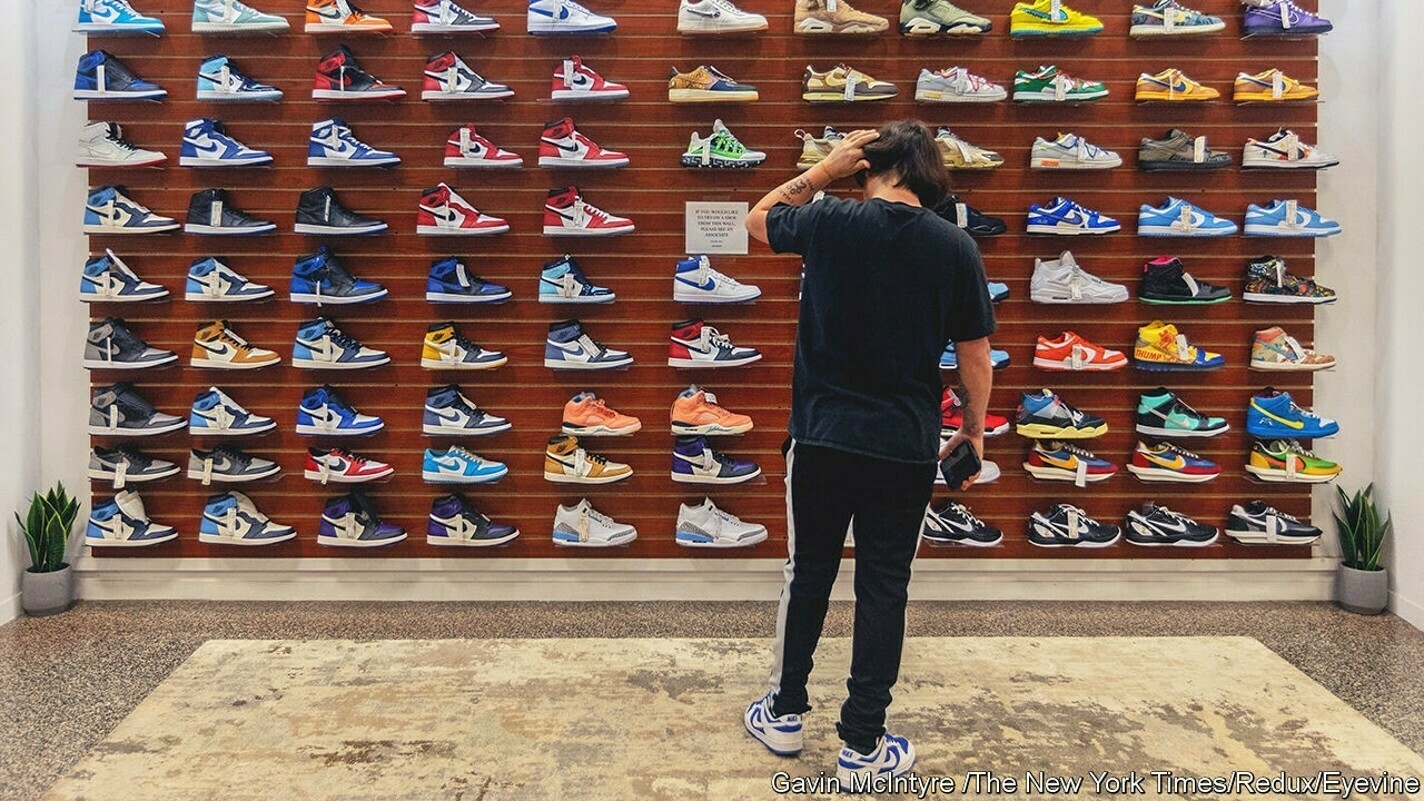
Uncertainty about the future may be encouraging impulsive spending of limited resources in the present. The young were disrupted more by covid than other generations and are now enjoying the rebound. According to McKinsey, American millennials (born between 1980 and the late 1990s) spent 17% more in the year to March 2022 than they did in the year before. Despite this short-term recovery from the dark days of the pandemic, their long-term prospects are much less good.Source: How the young spend their money | The Economist[…]
Youngsters’ appetite for instant gratification is also fuelling some distinctly ungreen consumer habits. The young have virtually invented quick commerce, observes Isabelle Allen of kpmg. And that convenience is affordable because it fails to price in all its externalities. The environmental benefits of eating plants rather than meat can be quickly undone if meals are delivered in small batches by a courier on a petrol-powered motorbike. Shein, a Chinese clothes retailer that is the fastest in fast fashion, tops surveys as a Gen Z favourite in the West, despite being criticised for waste; its fashionable garments are cheap enough to throw on once and then throw away. Like everyone else the young are, then, contradictory—because, like everyone else, they are only human.
The art of Battle Royale-style video games
My kids like Fortnite and Warzone. The backstory to the genre, as told in this article is really interesting, along with the realisation that it fuses storytelling and competition.

Video games broadly fall into two categories: those which, like sports, emphasize competition, and those which, like films, emphasize storytelling. Battle royale is a rare harmonious combination, a mode that encourages both dynamic, dramatic vignettes and high-stakes rivalry. At Infinity Ward, the Los Angeles-based co-developer of the Call of Duty series, which has long established the template for online competitive shooting games, PUBG was disruptive and divisive. “You could see it propagating through the office like wildfire,” Joe Cecot, the studio’s multiplayer-design director, said. “People were, like, ‘How do we make something like this? What would our twist on this be?’ ”Source: How “Battle Royale” Took Over Video Games | The New Yorker[…]
In the video-game medium, where players prize novelty—and, typically, not social commentary—the key to battle royale’s future may lie not in tweaking its rules but in deepening its story. In November, Activision released Warzone 2.0, which introduces some new mechanics. There’s now more than one safe circle, so players are herded into pockets of refuge, and it’s possible to interrogate downed opponents, making them reveal the position of their teammates. These embellishments add subtle points of difference, but it’s unlikely that they’ll energize the form. “Battle royale will now always be a part of the tool kit, in the same way that we’re never not going to have the fifty-two-card deck,” Lantz said. “But there’s not a lot of people making new games for the fifty-two-card deck. When a thirteen-year-old hears that there’s a new battle-royale game coming out today, it’s already a little bit boring. Like, you know, boomer stuff.”
Cambrian governance models
I think it’s fair to say that this article features ‘florid prose’ but the gist is that we should want society to be as complex as possible. This allow innovation to flourish and means we can solve some of the knottiest problems facing our world.
However, we’re hamstrung by issues around transnational governance, and particularly in the digital realm.
To summarise, we are traversing an epochal change and we lack the institutional capacity to complete this transformation without imploding. We could well fail, and the consequences of failure at this juncture would be catastrophic. However, we can collectively rise to the challenge and an exciting assemblage of subfields is emerging to help. We can fix the failed state that is the Internet if we approach building tech with institutional principles, and an Internet that delivers on its cooperative promise of deeper, denser institutional capacity is what we need as a planetary civilisation.Source: The Internet Transition | Robin BerjonWe don’t need a worldwide technical U.N. to figure this out. Rather, we need transnational topic-specific governance systems that interact with one another wherever they connect and overlap but that do not control one another, and that exercise subsidiarity to one another as well as to more local institutions. Yes, it will be a glorious mess — a Cambrian mess — but we will be collectively smarter for it.
Tax and/or eat the rich
I’m essentially just bookmarking this in case I think that I’ve misremembered the astounding difference in global wealth between the top 1% and bottom 90% mentioned in this article

The report said that for every $1 of new global wealth earned by a person in the bottom 90%in the past two years, each billionaire gained roughly $1.7m. Despite small falls in 2022, the combined fortune of billionaires had increased by $2.7bn a day. Pandemic gains came after a decade when both the number and wealth of billionaires had doubled.Source: Call for new taxes on super-rich after 1% pocket two-thirds of all new wealth | The Guardian
Logging off from AI?
An interesting and persuasive article from Lars Doucet who considers the ways in which AI spam might mean that people retreat from ‘open sea’ social networks (including gaming / dating ones) to more niche areas.
I don’t think there’s anything particularly wrong with interacting with AIs in ways that include emotion. But it’s a solipsistic existence, and perhaps not one that leads to human flourishing.
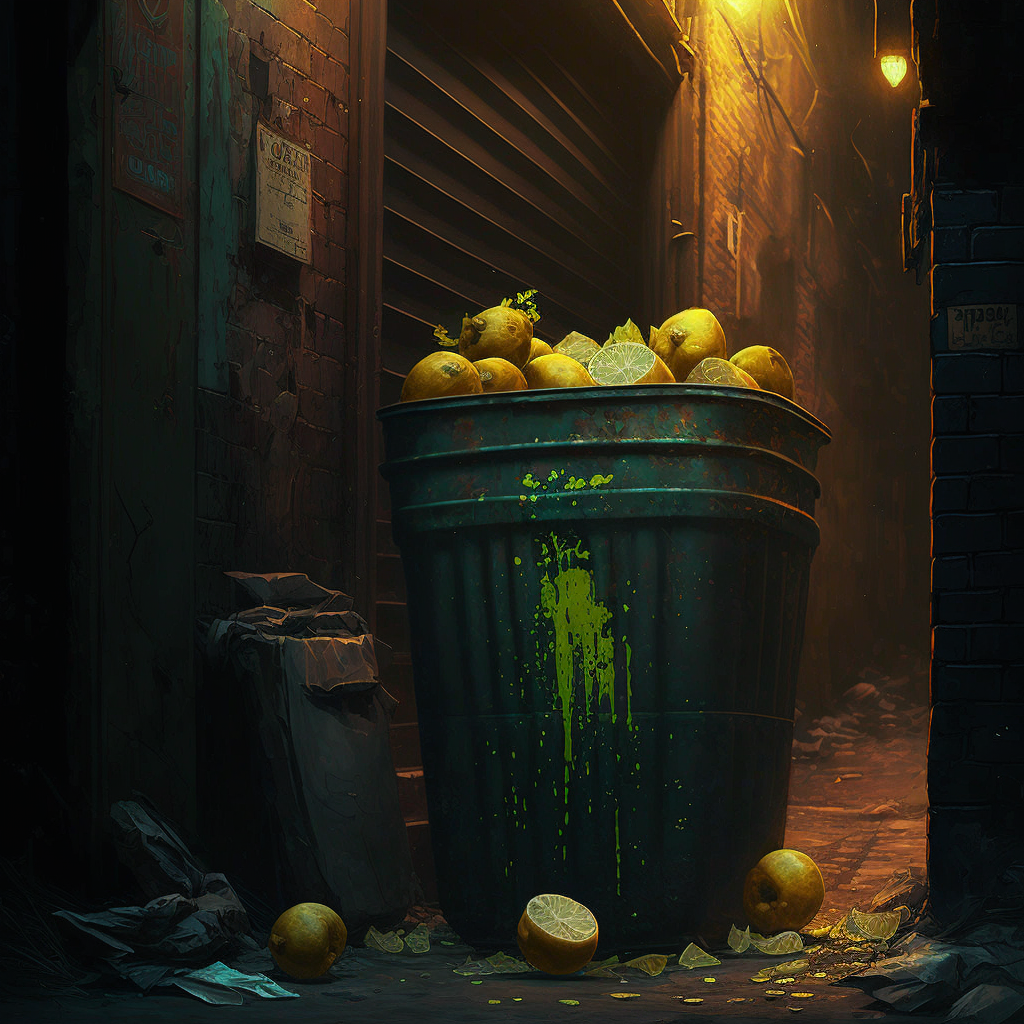
What happens when anyone can spin up a thousand social media accounts at the click of a button, where each account picks a consistent persona and sticks to it – happily posting away about one of their hobbies like knitting or trout fishing or whatever, while simultaneously building up a credible and inobtrusive post history in another plausible side hobby that all these accounts happen to share – geopolitics, let's say – all until it's time for the sock puppet master to light the bat signal and manufacture some consensus?Source: AI: Markets for Lemons, and the Great Logging Off | Fortress of DoorsWhat happens when every online open lobby multiplayer game is choked with cheaters who all play at superhuman levels in increasingly undetectable ways?
What happens when, from the perspective of the average guy, “every girl” on every dating app is a fiction driven by an AI who strings him along (including sending original and persona-consistent pictures) until it’s time to scam money out of him?
What happens when comments sections on every forum gets filled with implausibly large consensus-building hordes who are able to adapt in real time and carefully slip their brigading just below the moderator’s rules?
I mean, to various degrees all this stuff is already happening. But what happens when it cranks up by an order of magnitude, seemingly overnight?
What happens when most “people” you interact with on the internet are fake?
I think people start logging off.
Retro audio player
Adam Procter shared this with me recently, after witnessing the trials and tribulations of upgrading an iPod Classic. It’s pretty awesome, I have to say, but I don’t think I’m quite at the stage of custom PCBs quite yet…

Inspired by 1980s tape recorders, this audio player was designed with ease of use and accessibility in mind. Despite its nostalgic appearance, it packs modern hardware. Powered by the ESP32, it plays music and audiobooks from a micro SD card, either on its internal speaker or though a headphone jack. A 2.8“ IPS screen and mechanical buttons make up the simplistic user interface. The software is built around the ESP32-audioI2S library by GitHub user Schreibfaul1.Source: DIY Retro Audio Player | Hackaday.io
Paying less attention to the attention economy
This is a reply from John Udell, a very smart guy I’ve interacted with a few times over the years. He wisely doesn’t link to the post he’s critiquing, primarily because (ironically) it would give more attention to someone he’s suggesting has a problem weaning themselves off the attention economy.
Udell talks about the ‘sweet spot’ on Twitter having been between 200 and 15,000 followers. The most I had was around 14,500 which seemed pretty awesome for a few years. I did notice that number not going up much after 2014.
But, as he says, the point about saying things online if you’re a regular person is hanging out and discussing things. There are absolutely times when you want to shout about things and make a difference, but that’s what boosting/retweeting is for, right?

If you occupy a privileged position in the attention economy, as Megan McArdle does now, and as I once did in a more limited way, then no, you won’t see Mastodon as a viable replacement for Twitter. If I were still a quasi-famous columnist I probably wouldn’t either. But I’m no longer employed in the attention economy. I just want to hang out online with people whose words and pictures and ideas intrigue and inspire and delight me, and who might feel similarly about my words and pictures and ideas. There are thousands of such people in the world, not millions. We want to congregate in different online spaces for different reasons. Now we can and I couldn’t be happier. When people say it can’t work, consider why, and who benefits from it not working.Source: Of course the attention economy is threatened by the Fediverse | Jon Udell
Async work isn't just cancelling meetings
I thought this response by Becky Kane to Shopify publicly announcing that it’s cancelling 76,500 hours of meeting was not only a great example of identifying the issues underneath a problem, but also a masterclass in product marketing.
The Async Newsletter is from Twist, which positions itself as a collaborative messaging app for teams that doesn’t distract you. I’ve been meaning to try it for a while, and even more so now that I know how much they think about these things.
Kane’s point is that it’s easy to say ‘no meetings’ but this doesn’t provide another option for people. After all, if people are used to calling a meeting to share information, or because they’re not feeling ‘aligned’ as a team, or because they need to make a decision, how do they now do this?
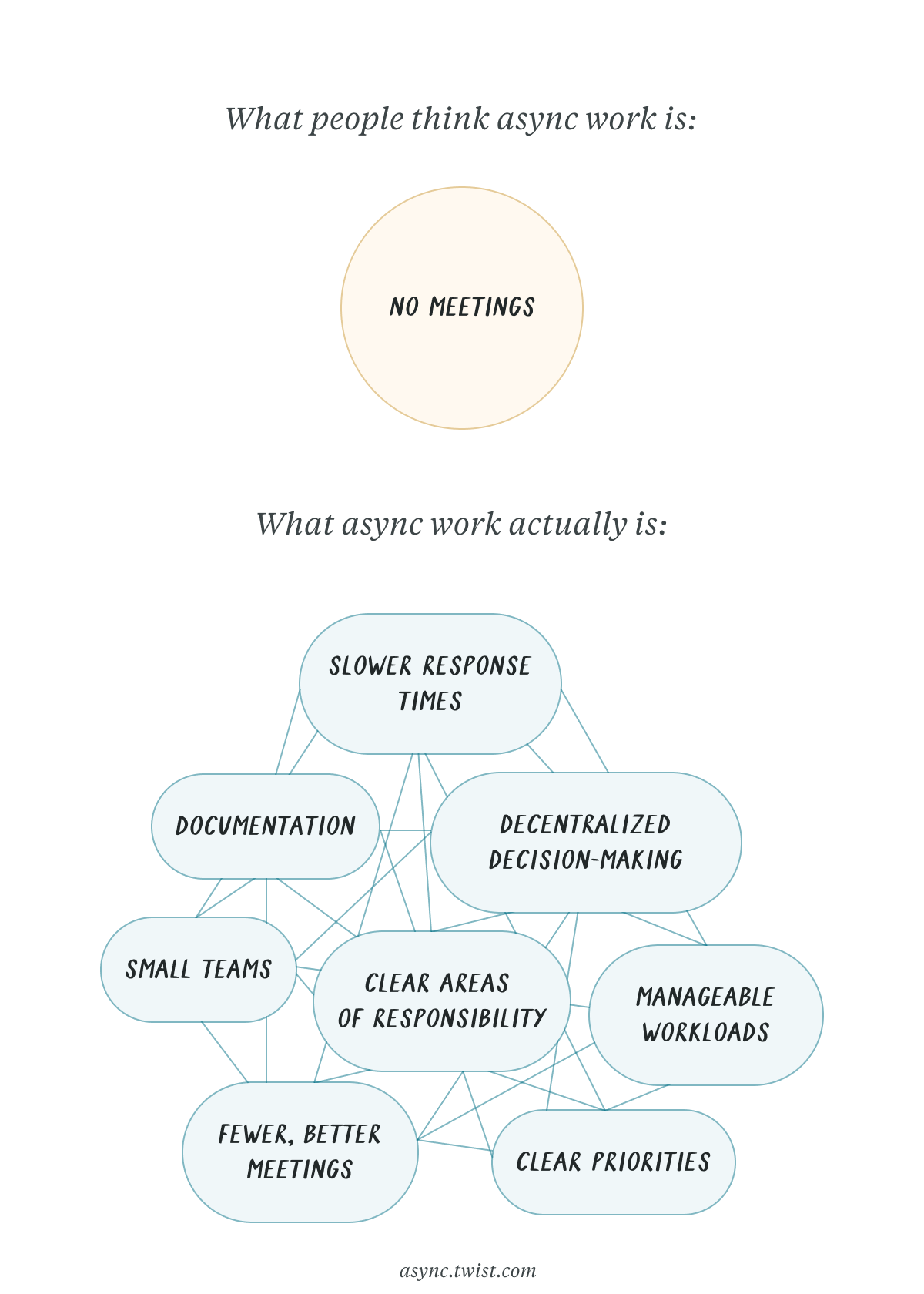
As employees returned from their holiday break, the company’s leadership fired the first shot in an all-out war on meetings, and boy was it a doozy:Effective immediately, all recurring meetings with more than 2 people would be automatically removed from company calendars – canceling 76,500 hours of meetings per year in one fell swoop.
This hard-line anti-meeting policy — designed to give people back time for focused work – also included:
Given the masthead of this newsletter, you’d think I would applaud the move. But I’m skeptical it will have the kind of lasting impact on employee engagement and productivity that Shopify’s leadership team is aiming for.
- A 2-week cooling off period before any meetings are put back on the schedule
- Moving all large meetings of 50+ people to the same 6-hour window on Thursdays
- Reupping a rule that no meetings at all can be held on Wednesdays
You may have noticed that Shopify “reupped” No Meeting Wednesdays. A friend of mine who worked there told me that it was an open secret that everyone scheduled meetings on Wednesdays anyway because it was the only time that wasn’t already taken up with meetings.
Without bigger, deeper changes to company culture and operations, there’s no reason to think the same meeting creep won’t simply happen again. Or worse, that communication will be pushed into even more fragmented, distracting, and ultimately unproductive forms.
Sixteen hours on, eight hours off.
I do like posts about people’s routines and, in fact, I contributed to a website which became a book of them! This particular one is by Warren Ellis, who seems to live quite a solitary existence, at least when he’s writing.
Being alone can bring an intensity to one’s work, I’ve found, which may or may not be relevant or welcome given on what you do for a living. Given Ellis is a writer of graphic novels, novellas, and screenplays, it’s absolutely fitting, I guess.
I work until I get hungry. I’ll watch something – a tv episode, part of a film – while eating lunch, which is either cold meats and flatbreads or salmon with vegetables or something with eggs. I keep it simple and repeatable. Also I have constant access to eggs, as mentioned above. At some point in the afternoon I’ll have an apple with walnuts and cheese. Eight espressos a day, two litres of water. I mention the food because the one thing productivity notes tend to forget is that thinking burns calories, and the first things to kill thinking are thirst and having no calories available to burn.Source: Morning Routine And Work Day, January 2022 | Warren Ellis
Getting serious
This is a great article by Katherine Boyle that talks about the lack of ‘seriousness’ in the USA, but also considers the wider geopolitical situation. We’re living at a time when world leaders are ever-older, and people between the ages of 18 and 29 just don’t have… that much to do with their time?
The Boomer ascendancy in America and industrialized nations has left us with a global gerontocracy and a languishing generation waiting in the wings. Not only does extended adolescence—what psychologist Erik Erikson first referred to as a “psychosocial moratorium” or the interim years between childhood and adulthood— affect the public life of younger generations, but their private lives as well.Source: It’s Time to Get Serious | The Free Press[…]
In many ways, the emergence of extended adolescence was designed both to coddle the young and to conceal an obvious fact: that the usual leadership turnover across institutions is no longer happening. That the old are quite happy to continue delaying aging and the finality it brings, while the young dither away their prime years with convenient excuses and even better TikTok videos.
[…]
So in 2023, here we are: in a tri-polar geopolitical order led by septuagenarians and octogenarians. Xi Jinping, Joe Biden and Vladimir Putin have little in common, but all three are entering their 70s and 80s, orchestrating the final acts of their political careers and frankly, their lives. That we are beholden to the decisions of leaders whose worldviews were shaped by the wars, famines, and innovations of a bygone world, pre-Internet and before widespread mass education, is in part why our political culture feels so stale. That the gerontocracy is a global phenomenon and not just an American quirk should concern us: younger generations who are native to technological strength, modern science and emerging cultural ailments are still sidelined and pursuing status markers they should have achieved a decade ago.
On the economic pressures of Covid
This is data from the USA, but the picture I should imagine might be true on a smaller scale in the UK. The difference, I guess, not being an economist, is that we still have a larger state over here and some vestiges of union action.
So how this plays out in terms of the pressure it puts on the workforce, and especially those employed directly or indirectly by the government, is different. It's why we're having lots of strikes right now.
It strikes me as extremely disingenuous of the UK government to be spinning the current crisis as being about them trying to avoid 'embedding 10% inflation' in the economy. It's not like we're going to see a reduction in prices if inflation levels decrease. People will still have had a real-terms pay cut.
As an historian by training, I can't help but think about the parallels with the Black Death and the collapse of feudalism due to the lack of workers...
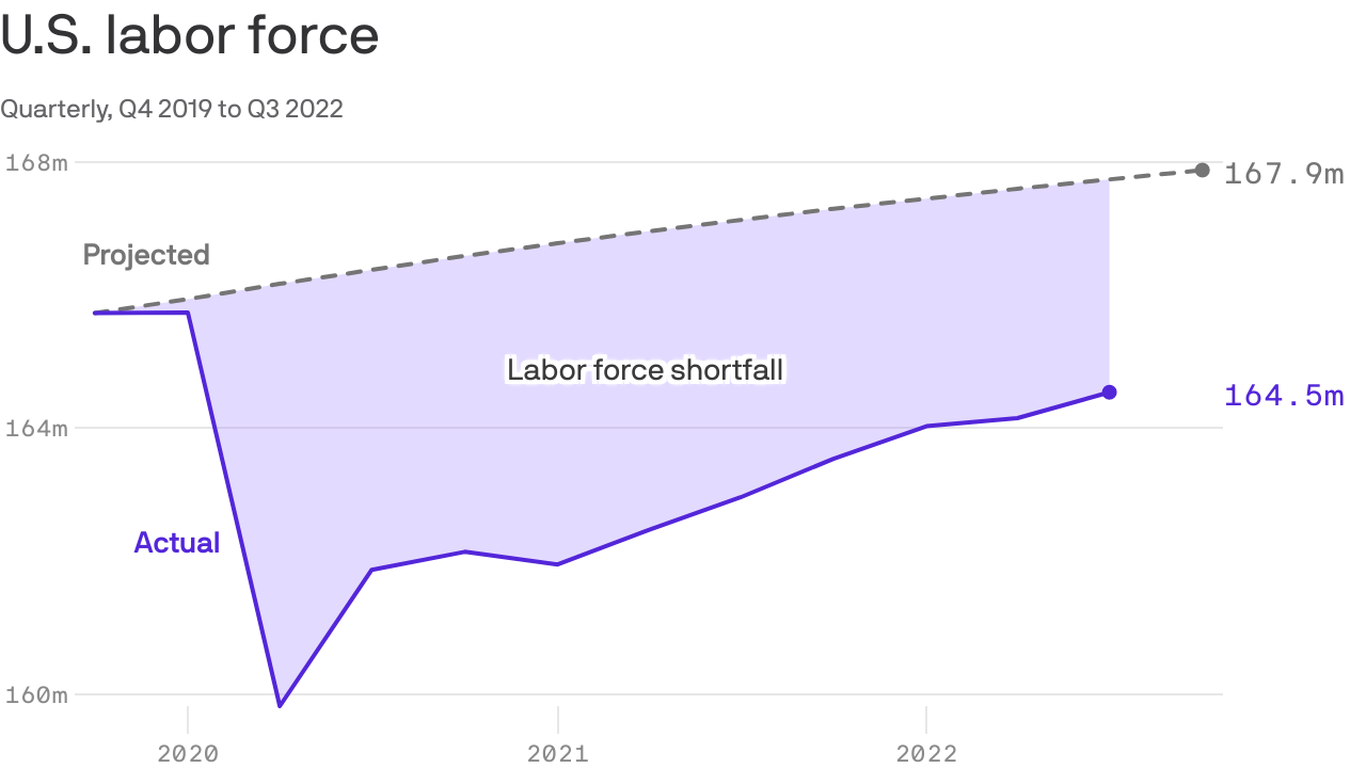
Federal Reserve chair Jerome Powell struck a particularly somber note at his press conference earlier this week when he mentioned that one reason the labor market is so tight right now is that many workers died from COVID-19.
The big picture: Economists have theorized for a while about the impact of COVID deaths on the labor market. Now, research has started to emerge and key public figures like Powell are starting to talk about it explicitly.
Source: Fed chair Powell on the U.S. labor shortage: COVID, retirements, missing immigrants | Axios
Facial recognition and the morality police
As this article points out, before 1979 removal of the traditional hijab was encouraged as part of Iran’s modernisation agenda. Once a theocracy came to power, however, the ‘morality police’ started using any means at their disposal to repress women.
Things have come to a head recently with high-profile women, for example athletes, removing the hijab. It would seem that the Iranian state is responding to this not with discussion, debate, or compassion, but rather with more repression -this time in the form of facial recognition and increasingly levels of surveillance.
We should be extremely concerned about this, as once there is no semblance of anonymity anywhere, then repression by bad actors (of which governments are some of the worst) will increase exponentially.

After Iranian lawmakers suggested last year that face recognition should be used to police hijab law, the head of an Iranian government agency that enforces morality law said in a September interview that the technology would be used “to identify inappropriate and unusual movements,” including “failure to observe hijab laws.” Individuals could be identified by checking faces against a national identity database to levy fines and make arrests, he said.Source: Iran to use facial recognition to identify women without hijabs | Ars TechnicaTwo weeks later, a 22-year-old Kurdish woman named Jina Mahsa Amini died after being taken into custody by Iran’s morality police for not wearing a hijab tightly enough. Her death sparked historic protests against women’s dress rules, resulting in an estimated 19,000 arrests and more than 500 deaths. Shajarizadeh and others monitoring the ongoing outcry have noticed that some people involved in the protests are confronted by police days after an alleged incident—including women cited for not wearing a hijab. “Many people haven’t been arrested in the streets,” she says. “They were arrested at their homes one or two days later.”
Although there are other ways women could have been identified, Shajarizadeh and others fear that the pattern indicates face recognition is already in use—perhaps the first known instance of a government using face recognition to impose dress law on women based on religious belief.
U.S. Army Corps releases cat calendar
Well, this is fun! More whimsy at work, please.

Gigantic cats using hydropower dams as scratching posts are just some of the pawed pinups in a 2023 calendar released by Pacific Northwest-based U.S. military personnel.Source: Yes, a branch of the Army Corps of Engineers did make a cat calendar | Stars and StripesThe photoshopped felines are part of an effort by the Portland, Ore., branch of the U.S. Army Corps of Engineers to portray their work in an entertaining light.
Engineering isn’t always exciting, so the district tries to have a fun social media presence, public affairs specialist Chris Gaylord told NBC’s Today.com on Monday.
“I will use levity whenever I can; that’s what people enjoy,” Gaylord said. “That’s not us dumbing things down. That’s us respecting and not taking for granted the attention of our publics.”
Getting your book published in 2023
This, via Warren Ellis, is a useful resource. I also like that its creator, Jane Friedman, has made it available to be downloaded, printed, and shared “no permission required” (although I wish she’d explicitly used a CC0 license)
When I shared this with a friend, they pointed out that it doesn’t include the ‘kickstarter’ kind of model. While Friedman points out that the chart is primarily for ‘trade press’ (i.e. books with a general audience) there’s a whole different type of approach, which I kind of pioneered a decade ago with OpenBeta and which is more easily achieved these days with platforms such as Leanpub.
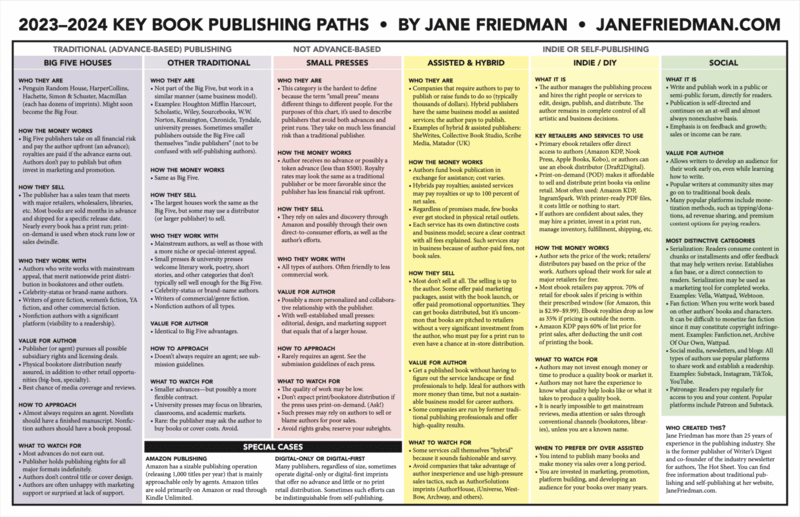
(click on image to download PDF)
One of the biggest questions I hear from authors today: Should I traditionally publish or self-publish?Source: The Key Book Publishing Paths: 2023–2024This is an increasingly complicated question to answer because:
Thus, there is no one path or service that’s right for everyone all the time; you should take time to understand the landscape and make a decision based on long-term career goals, as well as the unique qualities of your work. Your choice should also be guided by your own personality (are you an entrepreneurial sort?) and experience as an author (do you have the slightest idea what you’re doing?).
- There are now many varieties of traditional publishing and self-publishing, with evolving models and diverse contracts.
- It’s not an either/or proposition; you can do both. Many successful authors, including myself, decide which path is best based on our goals and career level.
Good writing is good writing
I’ve seen all of the Star Wars films at least once. I’m not big into sci-fi or fantasy, but on the recommendation of seemingly everyone (including my son) I’ve started watching Andor on Disney+.
I’m not even half-way through but it really is excellent, with no ridiculously CGI, just a believable world and an excellent storyline.
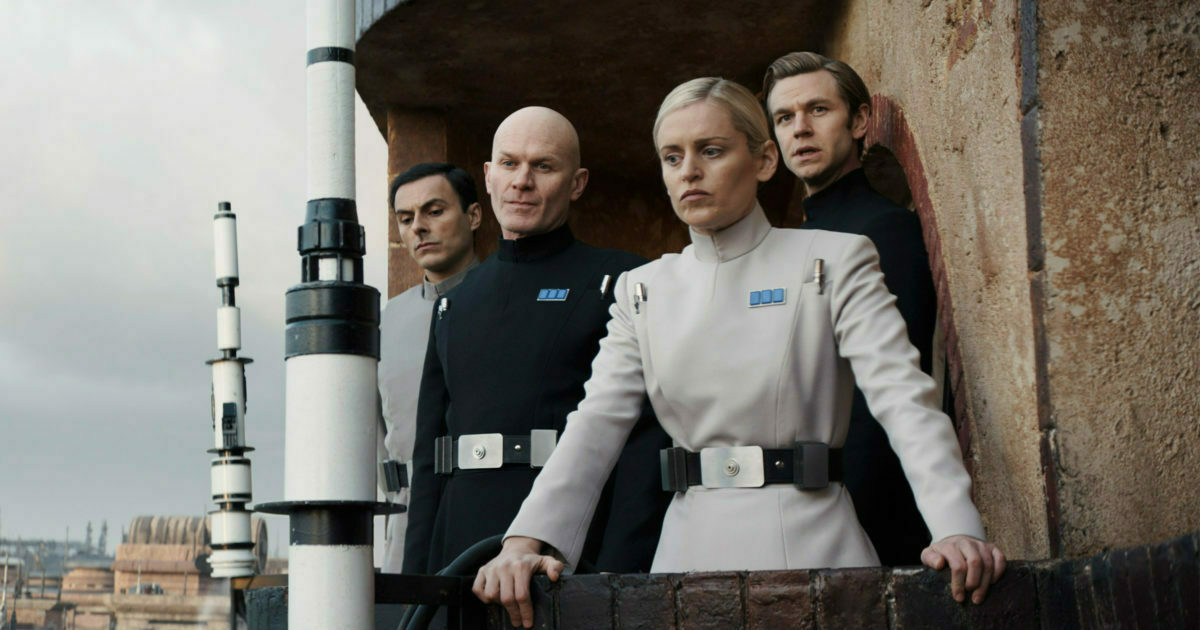
Andor largely eschews many Star Wars staples, such as wacky creatures and funny droids, focusing instead on the realities of power and violence. Fantasy author Erin Lindsey, who worked for many years as a UN aid worker, found the show’s depiction of politics to be completely believable. “I think there are clearly people on the writing team who are students of spy novels like [those by] John le Carré and who are students of politics and students of history, who are really looking at how revolution has happened here on Earth and what that looks like,” she says.Source: ‘Andor’ Is a Master Class in Good Writing | WIREDDespite its high quality, Andor‘s ratings have lagged behind Star Wars shows like Obi-Wan Kenobi and The Mandalorian. Geek’s Guide to the Galaxy host David Barr Kirtley hopes that Andor will attract a larger audience in season 2. “It’s so good,” he says. “It deserves higher ratings than it’s gotten so far. And I definitely want to see more shows like this. This is the kind of show—especially the kind of Star Wars show—that I’ve been pining after for all these years. So please let’s all just give it as much support as we can.”
Update your profile photo at least every three years
I think this is good advice. I try to update mine regularly, although I did realise that last year I chose a photo that was five years old! I prefer ‘natural’ photos that are taken in family situations which I then edit, rather than headshots these days.

Unfortunately, some people will make assumptions about you based on a photo, and those impressions paint a picture of how we perceive someone. “The first thing people encounter is the delta” between how you represent yourself in a photo and how you look in person, Marion Dino, a retired human resources executive and career coach explains. “You want to convey that you are trustworthy. Most people aren’t intentionally judging, but we all have unconscious biases, and you leave yourself open to the interpretation of being less than honest if you don’t represent yourself accurately.” Most of the time, a résumé doesn’t include a profile photo, but “recruiters do look at LinkedIn and other social media platforms,” Dino says. “You don’t want to leave the impression that you aren’t authentic.”Source: How Often Should You Update Your Profile Photos? | WIRED[…]
And how often should you update your photos, so they don’t give someone pause when you meet in person? “Profile pictures should be updated every three years unless there is a significant change in appearance. Then, they should be taken sooner.” So, the next time you scroll LinkedIn, log in to a Zoom meeting, or even send an email with a thumbnail profile photo, think about how you want to be perceived, and don’t hesitate to use a picture that fully represents who you are.